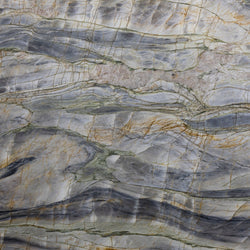
Vivaldi quartzite slab 3/4" honed stone
Honed Stone
$70.00 per S/F
Quartzite and soapstone stand apart in the world of stone countertops. Both give kitchens and islands natural beauty, timeless appeal, and surfaces that will work hard during everyday use. If you want to begin a kitchen renovation, update cabinets, or design a new island, these stones are materials that can grow with the space over time.
When it comes to countertop materials, quartzite and soapstone are two of the most talked-about natural stones. Both come in slab form, both are used for kitchen countertops, and both bring their own aesthetic appeal. The choice doesn’t have to be complicated if you think about how each stone fits into your design style and daily routine.
Quartzite has become a go-to material for homeowners who want stone countertops with just enough movement and energy to define the kitchen. Each slab carries natural color variations and realistic textures that are a perfect example of how stone can create a one-of-a-kind surface. You can go for polished quartzite if you want shine, or honed quartzite if you prefer the clean look of a softer finish. Either way, the stone creates movement and depth in a way that beautifully contrasts the rest of the kitchen.
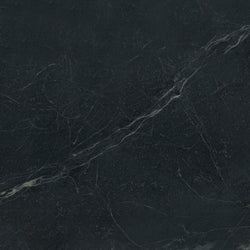
Soapstone countertops are a timeless option that feel a bit more lived-in as the years pass. Black soapstone is best used for islands or paired with lighter cabinets to create a high-contrast look that pairs well with stainless appliances. Over time, the surface develops a unique patina; it’s no wonder that so many kitchens still use this material. By applying mineral oil, you can accentuate this as well, drawing out green hues or dark gray tones that immediately brighten up the overall feel of the space.
Quartzite stands up to the toughest kitchens, resisting scratches in a way that makes it perfect for everyday use. Soapstone is softer, with talc content that gives the stone its smooth touch. Scratches might be visible, but they are also a carefree choice since they can easily be sanded out and refreshed with mineral oil. This means they are not a permanent concern, which makes soapstone countertops a great option for those who love a surface that evolves with time.
| Attribute | Quartzite | Soapstone |
|---|---|---|
| Origin | Quartz sandstone transformed by heat and pressure | Metamorphic rock with high talc content |
| Hardness | Very hard; resists scratches and etching | Softer surface; scratches show but can be sanded out |
| Resistance to Acidic Liquids | High; resists stains from acidic foods | Excellent; naturally non-porous and stain resistant |
| Appearance | Gray, cream, or green hues with dramatic veining | Dark gray to black with subtle veining; develops patina |
| Ideal Use | Kitchen countertops, islands, high-traffic spaces | Islands, rustic or classic kitchens, lower-traffic areas |
| Maintenance | Requires sealing about once a year | No sealing; optional mineral oil for color and patina |
| Heat Resistance | Excellent; use trivets to protect polished finish | Outstanding; can handle hot pots directly |
| Long-Term Value | Durable, strong, adds modern elegance | Lived-in look with evolving character over time |
Soapstone is best known for its ability to handle hot pots. You could even place cookware directly on the countertop without worry. Quartzite also has excellent heat resistance, though it’s a great idea to use trivets if you want to maintain the polish of the stone. Both materials give homeowners peace of mind when cooking or entertaining.
Quartzite countertops often come in shades of gray, cream, or green hues. The veining creates symmetry and movement that can tie into cabinets, backsplash tile, and the island. Soapstone, on the other hand, is most often found in darker tones. Black soapstone is the classic look, though variations of gray with lighter veining are also available. Each stone is a great way to add interest without overwhelming the rest of the kitchen design.
Quartzite countertops should be sealed, typically once a year, to help keep the surface stain resistant. This is a great way to protect the slab and keep the kitchen looking polished. Soapstone doesn’t need sealing, but it does develop patina, which you can maintain with mineral oil. If you want to create a kitchen that feels timeless due to natural beauty, both materials work; the difference is in how you prefer to interact with the surface over time.
The island is often the perfect spot to use stone countertops as a statement. Quartzite islands pull together the rest of the space with movement that draws the eye from one end to the other. Soapstone islands give the kitchen understated strength, especially when paired with bright cabinets that can create an unexpected focal point. Both are beautiful choices that can complement any kitchen renovation plan.
If you want to go bold with an authentic, natural look, soapstone countertops are the way to go. The patina gives every slab a story that extends above the basic idea of a countertop. Soapstone kitchens are also inspiring because the stone is highly resistant to stains and doesn’t have to be sealed. For families that cook often, it can stand up to hot pots, spills, and scratches in a way that makes it a carefree surface.
Quartzite countertops are all about beauty and strength. The natural stone has become a modern take that can easily become the centerpiece of a home renovation. It’s hard not to let your eye settle on the veining and natural color variations that lend updated style to the kitchen. If you want to create a surface that stands up to the toughest everyday use while keeping its polished finish, quartzite is another great example of stone that provides lasting value.
In the quartzite vs soapstone conversation, both materials are beautiful choices for countertop materials, islands, and kitchens. Quartzite offers movement, veining, and a polished strength that can make a big impact on the overall feel of the space. Soapstone brings unique patina, smooth texture, and a surface that can feel a bit more lived-in over time. Each has natural beauty, timeless appeal, and the ability to serve as the centerpiece of a kitchen renovation. At Artistic Tile, we give homeowners and designers access to natural stone slabs and tile available in many styles and finishes. Our collections inspire kitchens that stand up to everyday use while pulling together the rest of the design with authentic stone.
Read LessHoned Stone
$70.00 per S/F
$0.00 each
Honed Stone
$110.00 per S/F
3/4"
White
Honed
$70.00 per S/F
1-1/4"
White
Honed
$100.00 per S/F
1-1/4"
White
Polished
$100.00 per S/F
1-1/4"
Naica
Polished
$140.00 per S/F
3/4"
Naica
Leather
$100.00 per S/F
3/4"
Naica
Honed
$100.00 per S/F
3/4"
Naica
Polished
$100.00 per S/F
1-1/4"
Naica
Honed
$140.00 per S/F
Polished Stone
$140.00 per S/F
Honed Stone
$80.00 per S/F