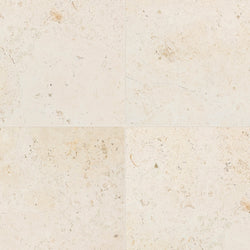
Gascogne beige limestone mosaic
12-23/32" X 11-1/23" X 3/8"
Gascogne Beige
Lightly Tumbled
$58.00 per S/F
Limestone and marble each tell a story of formation, texture, and beauty. You can explore how these natural stones compare and decide which works best for your design vision.
Limestone and marble are two natural stones that have inspired builders and designers for centuries. You can think about them as part of the same family, since marble is limestone transformed. Still, the way they form and the way they perform in design are different enough that you should look closely at each before making a decision.
The formation process is the main difference between limestone and marble.
Limestone forms as a sedimentary rock, built layer by layer from calcium carbonate fossils, shells, and marine animals. Over time, those layers compress into stone with fine grained textures and even fossil fragments you can see with the naked eye.
Marble is a metamorphic rock. When limestone is subjected to intense pressure and high temperature, the structure of the stone changes. Calcite crystals grow, creating crystal forms that give marble its polish and veining.
This natural progression from one material to another is what sets them apart.
Both stones are based on calcium carbonate, yet their structure changes how they behave. Marble’s crystal network makes it a bit stronger.
On the Mohs scale, limestone usually measures 3 to 4.
Marble usually measures 4 to 5.
That means marble is less soft than limestone, though both are gentler than granite or quartzite.
Each stone has unique characteristics that make it appealing in different ways.
Limestone has an earthy aesthetic, often light colored with subtle patterns. It can feel a bit more lived-in, showing the history of the shells and fossils that formed it.
Marble gives a brighter finish. White marble is the classic example, but grays and soft neutral shades are also common. The veining is longer visible, creating movement and depth in any space.
Tile gives the designer two natural stones that can easily become the highlight of a project.
When it comes to interior design, you can think about where the stone will be placed and how it will interact with the rest of the space.
Flooring: Limestone marble floors can add timeless charm and texture without feeling too heavy. Marble flooring creates movement and depth in a way that pulls together the rest of the design. In high traffic areas, sealing is important, since both are porous.
Kitchen Countertops: Marble stone is often chosen for countertops, with its natural color variations and realistic textures. Limestone can work too, especially if you want that understated look that ties into a warm palette.
Wall Cladding: Tile ideas to spark your new wall design often include both limestone and marble. Marble wall cladding draws the eye from one surface to another. Limestone wall cladding adds a softer finish that can grow with the space over time.
The use of these stones doesn’t stop indoors.
Building Material: Limestone has been a building material for centuries. It’s no wonder that many exterior facades across the world are limestone.
Exterior Facades: Marble facades, though less common, are a bold move that immediately brighten up a design.
Outdoor Projects: Limestone forms are often used in patios, pathways, and garden walls. They are a carefree choice for outdoor projects, while marble might be used as a decorative highlight.
Keep in mind that exposure to acid rain or acidic substances can affect both stones, so sealing and placement decisions matter.
Both limestone and marble are porous stones. That means they can take in liquids and show marks from acids. Sealing them is the way to protect their finish.
Limestone is a bit softer, so scratches might be more common.
Marble is stronger, but still responds to acids.
The choice of material should feel like it works with how you live. If you want to go bold, marble might be the route. If you prefer the clean look of understated stone, limestone could be the better match.
| Attribute | Limestone | Marble |
|---|---|---|
| Origin | Sedimentary rock formed from shells, fossils, marine animals | Metamorphic rock formed when limestone transforms under heat and pressure |
| Hardness (Mohs scale) | 3–4; bit softer and more porous | 4–5; stronger due to calcite crystals |
| Resistance to Acidic Substances | Low; reacts to acidic substances and acid rain | Low; etches with vinegar, citrus, wine |
| Appearance | Earthy aesthetic, light colored, subtle patterns, fossil fragments visible | White marble classics, gray tones, longer visible veining and crystal forms |
| Ideal Use | Outdoor spaces, wall cladding, exterior facades, flooring | Kitchen countertops, flooring, interior wall cladding, decorative projects |
| Care | Needs sealing; scratches more easily | Needs sealing; polish helps but still sensitive |
| Design Value | That understated look; can feel a bit more lived-in | Creates movement and depth in interiors; beautifully contrasts lighter palettes |
This is all about the symmetry and movement you want in your space. Limestone might be the better option if you want an understated backdrop that adds timeless charm. Marble could be the answer if you’d love to use a stone that beautifully contrasts the rest of the palette and makes a big impact on the overall feel of the room.
At Artistic Tile, we see limestone and marble not as competitors, but as all beautiful choices that inspire different design directions. You can easily get creative with either one, using natural stone materials that are Available in many styles and finishes.
When we work with clients, we help them think about how these stones will look in flooring, countertops, wall cladding, or even outdoor projects. You can find a material that functions both as a design centerpiece and as a surface that grows with the space over time.
We’d love to give you tile ideas to spark your new project, helping you find a look that adds timeless charm while balancing the impactful design you have in mind. Let’s create something that inspires you, together.
Read Less12-23/32" X 11-1/23" X 3/8"
Gascogne Beige
Lightly Tumbled
$58.00 per S/F
12-23/32" X 11-1/23" X 3/8"
Sahara Blue
Lightly Tumbled
$58.00 per S/F
12" X 24" X 3/8"
Cloud
Deep Brushed
$30.00 per S/F
18" X 36" X 3/8"
Cloud
Deep Brushed
$32.00 per S/F
24" X 24" X 3/8"
Cloud
Deep Brushed
$30.00 per S/F
24" X 48" X 11/32"
Cream
Semi-Polished
$19.00 per S/F
24" X 48" X 11/32"
Sand
Semi-Polished
$19.00 per S/F
18" X 18" X 3/8"
Breccia Vino
Polished
$44.00 per S/F
12" X 24" X 3/8"
Breccia Vino
Honed
$39.00 per S/F
Honed Stone Broken Joint 1.0cm
$50.00 per S/F
Honed 18" x 18" x 3/8" Stone Straight Edge
$20.00 per S/F
Honed Stone Broken Joint 1.0cm
$55.00 per S/F
$1,320.00 each
16" X 32" X 5/8"
Combe Brune
Honed
$45.00 per S/F
12" X 24" X 3/8"
Combe Brune
Honed
$38.00 per S/F
Honed 18" x 18" x 3/8" Stone Aris Edge
$28.00 per S/F
Honed 12" x 24" x 3/8" Stone
$30.00 per S/F
Honed 12" x 24" x 3/8" Stone Aris Edge
$60.00 per S/F
Tumbled 4" x 12" x 3/8" Stone
$40.00 per S/F
3/4"
Blue De Savoie
Polished
$100.00 per S/F
3/4"
Blue De Savoie
Honed
$100.00 per S/F
Honed Stone
$70.00 per S/F
Antiqued Stone Broken Joint 3.0cm
$28.00 per S/F
$488.00 each
Honed Stone
$40.00 per S/F