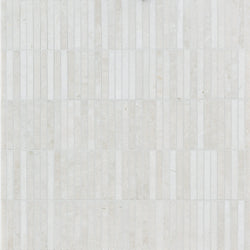
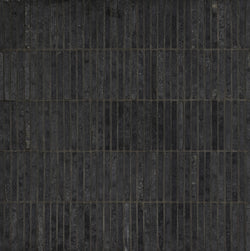
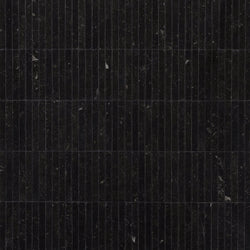
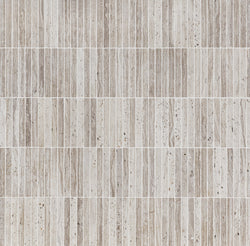
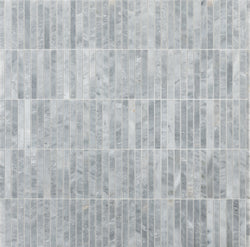
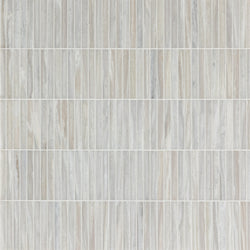
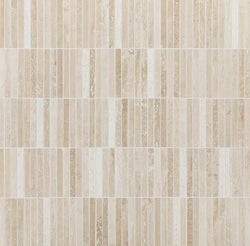
Abbey road bianco dolomiti dolomite mosaic
11-7/8" X 12-7/16" X 3/8"
Bianco Dolomiti
Honed
$50.00 per S/F
Wet room tile is the foundation of a modern, open-concept bathroom. Whether you’re designing a spa-like retreat or a compact, efficient layout, the right tile gives you a space that’s practical, stylish, and built to handle daily moisture. Explore porcelain, ceramic, mosaic, and natural stone tiles that stand up to wet conditions while adding visual interest and a tailored finish. From anti-slip shower floors to bold feature walls, these tile ideas will help you create a wet room that feels elevated, cohesive, and thoughtfully designed.
A wet room transforms any bathroom into a modern, open-concept space that is both practical and visually impressive. The right wet room tile is the foundation; it defines the look, supports safety, and holds up to daily use in a wet environment. If you want to create a bathroom that feels spacious, stylish, and easy to use, understanding your tile options is the first step.
Not every tile is suitable for the unique demands of a wet room floor or wet room walls. You need materials that are water resistant, easy to clean, and can handle constant moisture. Porcelain tiles and ceramic tiles are both excellent choices for wet rooms because they are dense, non-porous, and available in various sizes and finishes. For shower floors, look for tiles with an anti-slip rating of at least R10, which helps prevent slips in a wet environment.
Natural stone tiles such as slate, travertine, and granite bring organic texture and warmth but do require sealing to keep water out. Wood effect tiles and marble effect tiles deliver the look of natural materials with the performance of porcelain, which is a perfect example of how modern tile technology can pull together the rest of the room.
The wet room floor is the most critical area for both design and function. Large-format porcelain tiles create a streamlined look with fewer grout lines, which means less opportunity for water to seep through and a more tailored finish. If you want to make the space feel more expansive, this is a great way to do it.
For a bit of edgy style, mosaic tiles on the shower floor add traction and a playful pattern. They are also a great choice for livening up a small space, providing a lively pop of color and texture. If you prefer the clean look of stone, slate or marble effect tiles are all beautiful choices that add timeless charm and texture without feeling cold or clinical.
Wet room walls are the perfect spot to use tile as a design statement or to let the rest of the space shine. You can go for the traditional subway tile, which offers a wide variety of colors and patterns, or opt for large marble effect tiles that extend above the shower for a high-end look.
A feature wall with textured tiles or bold mosaic tiles serves as the focal point, drawing the eye from floor to ceiling. This is a great way to create a sense of depth and interest without overwhelming the space. For a modern take, hexagonal tiles or geometric patterns can add a bit of edge to the space and give your wet room a tailored, eclectic feel.
Neutral tones like grey, beige, and white are a timeless choice for wet rooms. They offer a sophisticated neutral backdrop that is easy to accessorize with wood accents, plants, or metallic fixtures. If you want to create a bright, cheerful space, consider Mediterranean-inspired ceramic tiles, think blues, yellows, and whites that immediately brighten up the room and provide a sunny, coastal vibe.
Wood effect tiles are another great example of how you can bring warmth into a wet room without worrying about water damage. They mimic the natural color variations and realistic textures of real wood, making the space feel a bit more lived-in and comfortable.
For those who love bold design, a mosaic tile feature wall or shower floor can give your wet room a much needed focal point. Too much pattern and color can cause the space to appear smaller, so balance the impactful design with neutral floor tiles or simple shower walls.
Fewer grout lines mean less maintenance and a more water-resistant finish. Large tiles are often the most practical for this reason.
Always use anti-slip tiles for the shower floor and main wet room floor. Safety should be your top priority.
Laying tiles diagonally or in a herringbone pattern can add even more subtle richness to the space and make the room feel tailored and eclectic.
Built-in shelves tiled to match the walls keep the space streamlined and functional, letting the rest of the space feel open and uncluttered.
To complete the look, think about how floating vanities, modern toilets, and even a bathtub or walk in showers can accentuate your tile choices. Metallic fixtures, glass panels, and integrated lighting all enhance the tiles and bring modern appeal to the space. Don’t forget the power of a well-placed feature wall or a bold floor pattern to serve as the focal point.
Wet room tile is not just for the high end or the ultra-modern bathroom. With so many materials, colors, and patterns available, you can find a material that fits your style, your budget, and your needs. From porcelain tiles that stand up to tough conditions to mosaic tiles that provide a lively pop of color, your options are nearly limitless. Keep in mind the importance of safety, water resistance, and a design that ties into the rest of your home. If you want to create a wet room that is both practical and beautiful, start with the right tile and let your inspiration guide you.
Wet room tile is specifically chosen for its water resistance and slip resistance, making it suitable for areas where the entire floor and sometimes walls are exposed to water. These tiles are designed to handle constant moisture and are often paired with waterproofing systems.
No, not all tiles are suitable. For wet room floors, porcelain, ceramic, and natural stone tiles with a non-slip finish are recommended. Glossy ceramic tiles should be avoided on floors due to slipping hazards.
Yes, the entire shower area floor and at least 300mm around it should be fully waterproofed (also called tanked) before tiling. Waterproofing the walls in the shower zone is also strongly advised.
Small-format tiles, such as mosaics, are often used on wet room floors because they follow the floor’s slope easily and provide more grout lines for traction, reducing the risk of slipping.
Large tiles can be used on wet room walls or on floor areas away from the main shower zone. For sloped shower floors, small tiles are easier to install and safer underfoot.
Porcelain is a top choice due to its density, low porosity, and durability. Natural stone and ceramic are also suitable if properly sealed and maintained.
Choose tiles with a textured, non-slip surface or add non-slip treatments. Prioritize safety, especially if children, elderly, or people with reduced mobility will use the wet room.
Yes, use a high-quality, flexible, waterproof tile adhesive and grout that are compatible with the waterproofing membrane. This prevents water from seeping behind the tiles.
Yes, but you need a solid, inflexible base. Use a floor former or suitable boarding to create a stable surface before waterproofing and tiling.
At minimum, waterproof the shower area and a splash zone of at least 300mm around it. If water is likely to reach other parts of the room, extend the waterproofing for added protection.
Keep grout lines clean and well-sealed. Regularly check for cracks or gaps, as these can let water through and cause damage beneath the tiles.
Yes, underfloor heating works well with wet room tiles. Use a compatible adhesive and insulation board to ensure efficient heating and a comfortable floor.
Mosaic tiles are an excellent option for wet room floors. Their flexible backing sheets follow the contours of sloped floors and provide extra grip due to more grout lines.
Thoughtful layout is key. Group wet fixtures together and use tile patterns or subtle curbs to visually and physically separate wet and dry zones, keeping vanities and toilets drier.
Skipping waterproofing, using the wrong adhesive, poor tile placement, or choosing slippery tiles can all lead to leaks, safety hazards, and costly repairs. Always plan carefully and use materials designed for wet environments.
Read Less11-7/8" X 12-7/16" X 3/8"
Bianco Dolomiti
Honed
$50.00 per S/F
11-7/8" X 12-7/16" X 3/8"
Nero
Honed
$40.00 per S/F
11-7/8" X 12-7/16" X 3/8"
Calacatta Gold
Honed
$50.00 per S/F
11-7/8" X 12-7/16" X 3/8"
Vanilla
Honed
$59.00 per S/F
11-7/8" X 12-7/16" X 3/8"
White Sand
Honed
$44.00 per S/F
11-7/8" X 12-7/8" X 3/8"
Arabescato D'oro
Honed
$51.00 per S/F
12-7/16" X 11-7/8" X 1/2"
Noir
Antiqued
$36.00 per S/F
12-7/16" X 11-7/8" X 1/2"
Sea Grey
Antiqued
$36.00 per S/F
11-7/8" X 12-7/16" X 3/8"
Birch White
Honed
$60.00 per S/F
11-7/8" X 12-7/16" X 3/8"
Viola Reale
Honed
$56.00 per S/F
11-7/8" X 12-7/16" X 3/8"
Bianco Carrara
Honed
$40.00 per S/F
11-7/8" X 12-7/16" X 3/8"
Ocean Blue
Honed
$64.00 per S/F
11-7/8" X 12-7/16" X 3/8"
Belgian Bluestone
Honed
$42.00 per S/F
11-7/8" X 12-7/16" X 3/8"
Cloud
Honed
$38.00 per S/F
11-7/8" X 12-7/16" X 3/8"
Grigio Toscana
Honed
$48.00 per S/F
11-7/8" X 12-7/16" X 3/8"
Smoke
Honed
$47.00 per S/F
11-7/8" X 12-7/16" X 3/8"
Volakas White
Honed
$43.00 per S/F
11-7/8" X 12-7/8" X 3/8"
Rosa Minerva
Honed
$51.00 per S/F
11-7/8" X 12-7/16" X 3/8"
Bianco Dei
Honed
$64.00 per S/F
12-1/8" X 11-7/16" X 3/8"
Black
Polished
$48.00 per S/F
12-1/8" X 11-7/16" X 3/8"
Fete Multi Blend
Polished
$68.00 per S/F
12-1/8" X 11-7/16" X 3/8"
Light Grey
Polished
$53.00 per S/F
12-1/8" X 11-7/16" X 3/8"
White
Polished
$53.00 per S/F
12-1/8" X 11-7/16" X 3/8"
Cream
Honed
$57.00 per S/F
12-1/8" X 11-7/16" X 3/8"
Grigio Toscana
Honed
$53.00 per S/F
12-1/8" X 11-7/16" X 3/8"
White
Honed
$53.00 per S/F
16" X 32" X 3/8"
Grey
Bush Hammered
$14.00 per S/F
16" X 32" X 3/8"
White
Bush Hammered
$14.00 per S/F
16" X 32" X 3/8"
Brown
Bush Hammered
$14.00 per S/F
16" X 32" X 3/8"
Taupe
Bush Hammered
$14.00 per S/F
Fringe Thin
Anthracite
5" X 5" X 1/2"
$54.00 per S/F
Fringe Thin
Grey
5" X 5" X 1/2"
$56.00 per S/F
Fringe Thin
Rose
5" X 5" X 1/2"
$54.00 per S/F
Fringe Thin
Red
5" X 5" X 1/2"
$54.00 per S/F
Fringe Bold
White
5" X 5" X 1/2"
$54.00 per S/F
Fringe Bold
Anthracite
5" X 5" X 1/2"
$54.00 per S/F
Fringe Bold
Grey
5" X 5" X 1/2"
$54.00 per S/F
Fringe Bold
Rose
5" X 5" X 1/2"
$54.00 per S/F
Fringe Bold
Red
5" X 5" X 1/2"
$54.00 per S/F
24" X 48" X 3/8"
White
Matte
$13.00 per S/F
24" X 48" X 3/8"
Beige
Matte
$13.00 per S/F
24" X 48" X 3/8"
Grey
Matte
$13.00 per S/F
24" X 24" X 3/8"
Linen
Matte
$12.00 per S/F
24" X 24" X 3/8"
Ecru
Matte
$12.00 per S/F
24" X 24" X 3/8"
Dune
Matte
$12.00 per S/F
24" X 24" X 3/8"
Camel
Matte
$12.00 per S/F
24" X 24" X 3/8"
Earth
Matte
$12.00 per S/F
24" X 24" X 3/8"
Jasper
Matte
$12.00 per S/F
24" X 48" X 3/8"
Linen
Matte
$13.00 per S/F
24" X 48" X 3/8"
Ecru
Matte
$13.00 per S/F
24" X 48" X 3/8"
Earth
Matte
$13.00 per S/F
24" X 48" X 5/16"
White
Matte
$13.00 per S/F
24" X 48" X 5/16"
Beige
Matte
$13.00 per S/F
24" X 48" X 5/16"
Grey
Matte
$13.00 per S/F
12" X 24" X 3/8"
White
Matte
$13.00 per S/F
12" X 24" X 3/8"
Beige
Matte
$13.00 per S/F
12" X 24" X 3/8"
Grey
Matte
$13.00 per S/F
12-13/16" X 12-3/4" X 3/8"
Grey Foussana
Honed
$44.00 per S/F
12-13/16" X 12-3/4" X 3/8"
Bardiglio
Honed
$44.00 per S/F
12-13/16" X 12-3/4" X 3/8"
Smoke
Honed
$44.00 per S/F
12-13/16" X 12-3/4" X 3/8"
Naica
Matte
$44.00 per S/F
9" X 18" X 3/8"
Bianco Carrara
Textured
$53.00 per S/F
9" X 18" X 3/8"
Grey Foussana
Textured
$53.00 per S/F
9" X 18" X 3/8"
Smoke
Textured
$53.00 per S/F
9" X 18" X 3/8"
Thassos
Textured
$82.00 per S/F
9" X 18" X 3/8"
Belgian Bluestone
Textured
$56.00 per S/F
24" X 48" X 3/8"
Brick
Raked
$17.00 per S/F
24" X 48" X 3/8"
Sand
Matte
$17.00 per S/F
24" X 48" X 3/8"
Sand
Raked
$17.00 per S/F