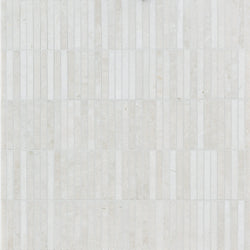
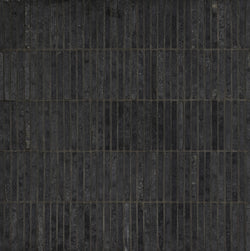
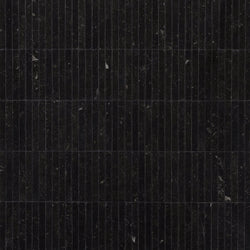
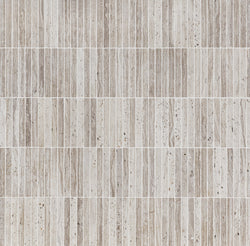
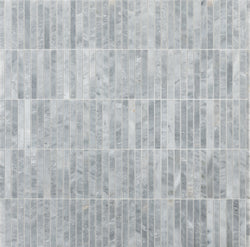
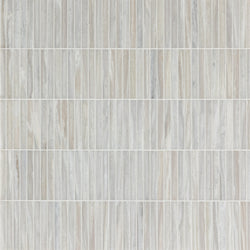
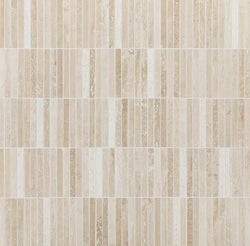
Veronese nero tile
24" X 24" X 3/8"
Nero
Honed
$33.00 per S/F
Terrazzo and marble may share a polished reputation, but they couldn’t be more different. Marble brings natural beauty shaped by time, while terrazzo creates patterns with marble chips, recycled materials, and resin. See how each one looks, performs, and fits into kitchens, bathrooms, and high traffic floors, then explore our collection to find the material that suits your vision.
When you compare terrazzo vs marble, you’re looking at two materials that serve similar functions but come from very different origins. Marble is a natural stone pulled directly from the earth. Terrazzo is a composite material created by combining marble chips, aggregate chips, cement, or epoxy resin into a poured surface. Both can function as flooring, countertops, or wall tile, but the way they look, perform, and age over time will guide your decision.
Marble has been valued for centuries, and its use across architecture and design proves why it continues to inspire. As a natural stone, marble offers natural color variations and realistic textures that create beauty no two slabs can match. The veining patterns, created deep in the ground, are all beautiful choices that give each project a one-of-a-kind finish.
A polished marble surface can immediately brighten up a bathroom or kitchen. Honed marble creates a smooth surface with a matte look that feels more lived-in. Marble tiles can be installed on floors, walls, or countertops, and they are often the most requested material for projects where beauty and tradition are important.
Because marble is porous, it can be prone to staining, scratching, and moisture if it isn’t sealed and maintained. Spills from coffee, wine, or acidic substances will need to be cleaned quickly. If you want to create a bathroom or kitchen that stands up over time, marble is a great option, but you should also keep in mind that it doesn’t have to look perfect to feel timeless.
Terrazzo is a poured material that combines marble chips, recycled materials, glass, and epoxy resin or cement into a surface that can be ground and polished smooth. The result is a floor, countertop, or wall that has endless design flexibility. You can find a material that fits a modern take or something that feels traditional, depending on the aggregates you use.
Architects and interior designers love terrazzo because it gives them a chance to create interest by combining different colors, aggregates, and patterns. With terrazzo floors, you can create movement and depth in a space. Epoxy terrazzo especially functions both as a strong surface and as a design medium, since it can include recycled materials for an eco friendly option.
Unlike marble, terrazzo is non porous when poured with resin. That means it doesn’t absorb moisture the way natural stone does, and it’s easier to maintain. It’s also highly stain resistant, which makes it a carefree choice for commercial spaces and high traffic projects.
Marble’s overall appearance is driven by the stone itself. You get sweeping veining, a smooth polished shine, or a honed matte surface that pulls together the rest of the design. The beauty is in its natural unpredictability.
Terrazzo’s appearance, on the other hand, is controlled by design. You can create patterns with marble chips, recycled glass, or other aggregates. You can also adjust the color of the resin or cement base. This is a great way to add a fun, playful tone to a bathroom floor or to create a timeless look across a commercial lobby. Terrazzo tiles that extend throughout the space can make a big impact on the overall feel of the room.
If you want to go bold, terrazzo gives you that chance to make a statement. If you prefer the clean look of natural stone, marble will give you a surface that ties into the broader design without being overwhelming.
| Attribute | Terrazzo | Marble |
|---|---|---|
| Origin | Composite material made of marble chips, aggregate chips, cement, or epoxy resin | Natural stone formed from limestone recrystallized under heat and pressure |
| Appearance | Patterns created by aggregates; customizable colors and designs | Natural veining, polished shine or honed matte surface |
| Durability | Non porous when resin-based; strong in high traffic spaces | Strong but porous; prone to staining, scratching, and chipping |
| Stain & Moisture | Non porous with epoxy; resists spills and bacteria | Porous; susceptible to staining and moisture if not sealed |
| Design Flexibility | Can include recycled materials, glass, and aggregates; wide design options | Limited to natural patterns and colors created by the stone |
| Maintenance | Low maintenance; easy cleaning with mild detergent | Needs sealing and careful cleaning to prevent etching and staining |
| Ideal Use | Commercial projects, high traffic floors, bathrooms, foyers, countertops | Bathrooms, kitchens, countertops, decorative walls, entryways |
| Initial Cost | Higher due to poured installation and grinding process | Varies widely; tiles more affordable, rare slabs expensive |
| Long-Term Value | Lasts decades; stands up to heavy traffic with proper installation | Timeless beauty but may need ongoing sealing and care |
Durability is often the deciding factor in terrazzo vs marble. Marble can last decades when sealed and cared for, but it is susceptible to scratching, chipping, and staining. Heat and moisture can also impact marble if it’s not sealed properly. For some designers, this patina is all about the symmetry and movement of natural life, but for others, it may feel like a drawback.
Terrazzo floors are the perfect spot to use in high traffic areas. Airports, schools, and commercial projects rely on terrazzo because it can stand up to thousands of footsteps each day. The resin binder makes it non porous, so spills and bacteria won’t penetrate the surface. This means they are easier to clean and maintain compared to marble. With proper installation, terrazzo floors can last the life of the building.
Cost is another major factor when comparing terrazzo vs marble. Marble tiles or slabs vary in price depending on rarity, color, and veining. Some are relatively affordable, while others become a luxury purchase. Installation for marble countertops or flooring is straightforward, but the initial cost will depend on the specific material you select.
Terrazzo requires a higher initial cost because it is poured in place, ground, and polished. That process adds labor, which raises the investment. Still, terrazzo can easily become cost-effective over time because it lasts longer and needs less sealing. If you want to create a project that doesn’t have to be replaced, terrazzo floors are a bold move that often pays off.
Cleaning and maintenance separate terrazzo and marble even more. Marble should be sealed, and you should avoid cleaners that could scratch or etch the surface. Spills should be wiped immediately, especially in kitchens and bathrooms. While you can maintain marble, you shouldn’t expect it to look perfect forever.
Terrazzo doesn’t demand as much care. Because it is non porous, spills are easy to wipe up. Epoxy terrazzo is also resistant to bacteria and staining, making it a great option for bathrooms, kitchens, or living spaces. If you want to create a surface that is easier to clean without ongoing sealing, terrazzo floors and countertops will give you peace of mind.
One of the strongest advantages of terrazzo is its design flexibility. You can create patterns, logos, or designs that become part of the surface itself. Terrazzo can be installed in different colors and aggregates, which offers a wide variety of looks. Designers often use terrazzo to inspire movement and depth in large spaces.
Marble is different in that the design comes from nature. You could even bookmatch marble slabs to create symmetry across a wall or floor. This is a great example of how natural stone can create timeless beauty, but it doesn’t offer the same control that terrazzo does.
Marble is best used in bathrooms, kitchens, and rooms where its natural charm defines the space. Countertops and floors in marble are all beautiful choices for projects that aim for tradition and elegance. If you want to create a surface that will inspire and elevate your space, marble is a material that should be at the top of your list.
Terrazzo is best used in high traffic projects, commercial buildings, and large residential floors. Foyers, bathrooms, and kitchens can also benefit from terrazzo floors. With patterns, aggregates, and colors, terrazzo becomes a material that can immediately brighten up a space while standing up to the toughest use.
Marble
Terrazzo
The choice of material between terrazzo vs marble will depend on your project goals. If you want to create a kitchen, bathroom, or feature wall that pulls together the rest of the design with natural beauty, marble is the answer. If you want to create a bold, modern take that can stand up to high traffic and give you endless design options, terrazzo is the way forward.
Both terrazzo and marble are materials that have inspired designers and architects for centuries. The decision comes down to how you want your space to feel and the performance you expect over time. You can’t go wrong with either, but you should think about how they match your project and what will work best for you.
Read Less24" X 24" X 3/8"
Nero
Honed
$33.00 per S/F
24" X 24" X 3/8"
Crema
Honed
$28.00 per S/F
24" X 24" X 3/8"
Multi Colore
Honed
$33.00 per S/F
24" X 24" X 3/8"
Verde Perlino
Honed
$33.00 per S/F
24" X 24" X 3/8"
Fumo Rosato
Honed
$33.00 per S/F
11-7/8" X 12-7/16" X 3/8"
Bianco Dolomiti
Honed
$50.00 per S/F
11-7/8" X 12-7/16" X 3/8"
Nero
Honed
$40.00 per S/F
11-7/8" X 12-7/16" X 3/8"
Calacatta Gold
Honed
$50.00 per S/F
11-7/8" X 12-7/16" X 3/8"
Vanilla
Honed
$59.00 per S/F
11-7/8" X 12-7/16" X 3/8"
White Sand
Honed
$44.00 per S/F
11-7/8" X 12-7/8" X 3/8"
Arabescato D'oro
Honed
$51.00 per S/F
12-7/16" X 11-7/8" X 1/2"
Noir
Antiqued
$36.00 per S/F
12-7/16" X 11-7/8" X 1/2"
Sea Grey
Antiqued
$36.00 per S/F
11-7/8" X 12-7/16" X 3/8"
Birch White
Honed
$60.00 per S/F
11-7/8" X 12-7/16" X 3/8"
Viola Reale
Honed
$56.00 per S/F
11-7/8" X 12-7/16" X 3/8"
Bianco Carrara
Honed
$40.00 per S/F
11-7/8" X 12-7/16" X 3/8"
Ocean Blue
Honed
$64.00 per S/F
11-7/8" X 12-7/16" X 3/8"
Belgian Bluestone
Honed
$42.00 per S/F
11-7/8" X 12-7/16" X 3/8"
Cloud
Honed
$38.00 per S/F
11-7/8" X 12-7/16" X 3/8"
Grigio Toscana
Honed
$48.00 per S/F
11-7/8" X 12-7/16" X 3/8"
Smoke
Honed
$47.00 per S/F
11-7/8" X 12-7/16" X 3/8"
Volakas White
Honed
$43.00 per S/F
11-7/8" X 12-7/8" X 3/8"
Rosa Minerva
Honed
$51.00 per S/F
11-7/8" X 12-7/16" X 3/8"
Bianco Dei
Honed
$64.00 per S/F
11" X 11-9/16" X 3/8"
Nero
Polished
$55.00 per S/F
11" X 11-9/16" X 3/8"
Blue
Polished
$83.00 per S/F
11" X 11-9/16" X 3/8"
Lilac
Honed
$73.00 per S/F
11" X 11-9/16" X 3/8"
Thassos
Honed
$72.00 per S/F
11" X 11-9/16" X 3/8"
Thassos
Polished
$72.00 per S/F
11" X 11-9/16" X 3/8"
Bianco Antico
Honed
$64.00 per S/F
11" X 11-9/16" X 3/8"
Rosa Portogallo
Honed
$62.00 per S/F
11" X 11-9/16" X 3/8"
Vanilla
Honed
$65.00 per S/F
12-1/8" X 11-7/16" X 3/8"
Black
Polished
$48.00 per S/F
12-1/8" X 11-7/16" X 3/8"
Fete Multi Blend
Polished
$68.00 per S/F
12-1/8" X 11-7/16" X 3/8"
Light Grey
Polished
$53.00 per S/F
12-1/8" X 11-7/16" X 3/8"
White
Polished
$53.00 per S/F
12-1/8" X 11-7/16" X 3/8"
Cream
Honed
$57.00 per S/F
12-1/8" X 11-7/16" X 3/8"
Grigio Toscana
Honed
$53.00 per S/F
12-1/8" X 11-7/16" X 3/8"
White
Honed
$53.00 per S/F
Honed Stone Broken Joint 1.0cm
$55.00 per S/F
$396.00 each
12" X 24" X 3/8"
Calacatta Borghini
Honed
$59.00 per S/F
12" X 24" X 3/8"
Calacatta Borghini
Polished
$59.00 per S/F
4" X 12" X 3/8"
Calacatta Borghini
Honed
$51.00 per S/F
4" X 12" X 3/8"
Calacatta Borghini
Polished
$51.00 per S/F
Honed 24" x 24" x 3/8" Stone Aris Edge
$40.00 per S/F
$1,320.00 each
Honed 12" x 24" x 3/8" Stone
$30.00 per S/F
Honed 12" x 24" x 3/8" Stone Aris Edge
$60.00 per S/F
Tumbled 4" x 12" x 3/8" Stone
$40.00 per S/F
14-5/16" X 14-5/16" X 3/8"
Grey
Honed
$105.00 per S/F
14-5/16" X 14-5/16" X 3/8"
Multi
Mixed Finish
$105.00 per S/F