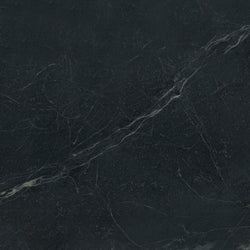
Nero marquina marble slab 3/4"
3/4"
Nero Marquina
Polished
$45.00 per S/F
Soapstone and marble are two of the most admired natural stones for countertops. Soapstone is valued for its heat tolerance and ease of care, while marble is admired for its veining and historic character. Both bring beauty to kitchens, bathrooms, and gathering spaces, yet they perform differently in everyday use. Understanding how these stones compare will help you choose the right surface for your home.
When it comes to natural stone countertops, two of the most captivating choices homeowners debate over are soapstone and marble. Both stones are celebrated for their beauty, but they couldn’t be more different in how they age, handle daily use, and bring personality to a space. If you’re comparing soapstone vs marble, this guide gives you the clear, detailed breakdown you need.
Both soapstone and marble are metamorphic rocks, but their composition gives them distinct personalities. Soapstone originated from mineral talc, which explains why it’s relatively soft compared to other natural stones. Marble, on the other hand, is composed mainly of calcium carbonate. That calcium carbonate in marble reacts quickly with acids, which is why slices of lemon or even red wine can etch its surface if not wiped up immediately.
Soapstone countertops are naturally heat tolerant and quietly elegant with their soft gray base, which typically deepens into a darker shade with greenish tones over time. Marble ranges from classic white with faint veins to exotic varieties with striking green, blue, pink, and even red hues. Both soapstone and marble are stunning, but their strengths and quirks make them suited for very different lifestyles.
If you want a kitchen material that feels laid-back but still eye-catching, soapstone could be the answer. Its smooth feel and unique natural color variations and realistic textures give any countertop material a presence that feels instantly lived-in.
Soapstone can stand up to hot pans and pots easily, which makes it a carefree choice for homeowners who don’t want to fuss with trivets or heat pads.
Over time, soapstone develops a delicate patina, gradually shifting from light gray to a deeper, richer shade. Mineral oil can be used to accelerate this process if you’d love to use a darker look right away.
On the Mohs scale, soapstone is softer than granite or quartzite, so it can scratch more easily. The upside is that scratches can be sanded out, a benefit you don’t usually get with harder stones.
Soapstone countertops typically measure anywhere from $70 to $120 per square foot, depending on the grade and origin.
| Attribute | Soapstone | Marble |
|---|---|---|
| Origin | Metamorphic rock originated from mineral talc | Metamorphic rock composed mainly of calcium carbonate |
| Hardness | Softer; scratches more easily but can be sanded out | Harder than soapstone but relatively softer than granite |
| Heat Tolerance | Excellent; can handle hot pans and pots directly | Moderate; trivet or heat pad recommended |
| Reaction to Acids | Non-reactive; unaffected by most household acids | Reactive; etches easily when exposed to oils, wine, or citrus |
| Appearance | Light gray that deepens into darker greenish tones; develops a delicate patina | Wide range of colors from white with faint veins to exotic green, blue, pink, and red |
| Patina / Aging | Develops a lived-in, darker patina; mineral oil often used to speed the process | Improves with age; etches and wear marks add historic, romantic character |
| Maintenance | Low-maintenance; scratches can be repaired and mineral oil applied as desired | Higher-maintenance; needs spills wiped immediately and may require polishing |
| Installation Costs | $70–$120 per square foot | Starts around $85 per square foot, higher for exotic slabs |
| Best Use | Kitchens where heat resistance is key, fireplaces, prep areas | Kitchens, bathrooms, accent walls where visual impact is desired |
If you’re after a surface that embodies quiet elegance and a refined feel, marble is all about movement and history in stone. Homeowners with marble countertops know the immediate payoff is its luxurious look, but while it’s all beautiful choices, you need to be prepared for the reality of daily care.
As mentioned earlier, calcium carbonate in marble reacts quickly with stray oils and acids. That means wipe up spills immediately if you want to keep the surface free of etch marks.
Marble comes in a wide range of color variations, from gray with faint veins to exotic varieties including green, blue, pink, and red. This is a great example of a material that serves as the centerpiece of a kitchen.
Unlike engineered stone, marble improves with age. Etches and patina create a look that feels historic, even romantic. Many designers and homeowners actually appreciate this “lived-in” appearance.
Costs for marble countertops start around $85 per square foot and can run much higher for exotic selections.
The choice of material for your kitchen countertops doesn’t have to feel overwhelming. Here’s what separates soapstone and marble most clearly:
Soapstone is a softer stone compared to marble, but its scratches can be repaired more easily. Marble is harder, though still relatively softer than granite, and scratches are less forgiving.
Soapstone handle heat equally throughout the entire surface. Marble needs a trivet or heat pad to protect it from hot pans.
Soapstone achieves a delicate patina that homeowners often accelerate with mineral oil. Marble improves with age in a different way, etching and wearing into a softer, lived-in finish.
Both stones are available in intriguing colors. Soapstone is usually gray which typically deepens into darker greenish tones. Marble ranges from classic white to bold greens, blues, pinks, and reds.
If you want a low-maintenance kitchen, soapstone is better. Marble requires careful handling of oils, acids, and everyday spills.
Both soapstone and marble are often used as countertop material, but they also bring a unique personality to other parts of the home. For instance, soapstone is practical around fireplaces because it can handle temperature changes. Marble, with its dramatic movement and luxurious feel, is often used for bathroom vanities and accent walls.
In kitchens, think about what kind of cook you are. If you want to set hot pans down without worry, soapstone will give you that benefit. If you want countertops that are all about natural color variations and textures that draw the eye from across the room, marble might be the better fit. You can even pair the two stones if you want to create balance, the marble on an island serving as a statement, while soapstone surrounds the more functional prep areas.
Price plays a role in every remodel. Soapstone countertops generally cost less than exotic marbles, though both fall into a mid-to-premium tier for natural stone. The cost per square foot for marble countertops starts higher, especially for rare colors or imported slabs.
Durability isn’t just about hardness; it’s also about how the stone reacts over time. Soapstone scratches but repairs easily. Marble etches, and while it can be polished, the marks tend to become part of the stone’s history. If you want a surface that looks crisp year after year, soapstone might be easier. If you love the idea of a patina telling the story of your kitchen over time, marble delivers.
It all comes down to lifestyle. Both soapstone and marble are beautiful, natural stones that inspire homeowners for different reasons.
The truth is you can’t go wrong; both stones are all beautiful choices. If you want to create a space where the material tells a story and matches your lifestyle, these two stones prove that natural beauty doesn’t have to be perfect to be unforgettable.
Read Less3/4"
Nero Marquina
Polished
$45.00 per S/F
3/4"
Nero Marquina Extra
Honed
$50.00 per S/F
1-1/4"
Nero Marquina
Rock
$110.00 per S/F
3/4"
Nero Dorato
Polished
$65.00 per S/F
3/4"
Nero Dorato
Honed
$65.00 per S/F
Polished Stone
$70.00 per S/F
$0.00 each
3/4"
Calacatta Monet
Polished
$140.00 per S/F
3/4"
Calacatta Monet Extra
Polished
$160.00 per S/F
3/4"
Calacatta Monet
Honed
$140.00 per S/F
Honed Stone
$70.00 per S/F
Honed Stone
$70.00 per S/F
Polished Stone
$300.00 per S/F
Honed Stone
$80.00 per S/F