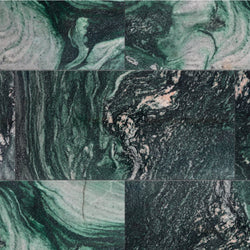
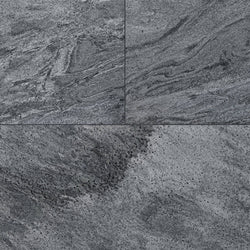
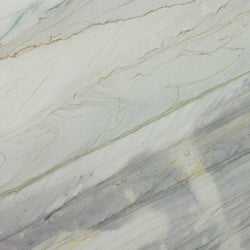
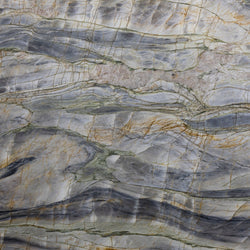
Ambra bianco carrara marble dimensional tile
24" X 24" X 5/8"
Bianco Carrara
Mixed Finish
$160.00 per S/F
Sandstone and quartzite are both natural stone materials, yet they differ in origin, strength, and character. Sandstone is a sedimentary rock with warm tones, while quartzite is a metamorphic rock valued for its toughness and crystalline look. Comparing the two helps you see which stone is best suited for slabs, countertops, or walls in your home.
When you think about sandstone vs quartzite, you’re looking at two stones that share a connection yet perform very differently. Sandstone is a sedimentary rock formed from compacted sand grains, while quartzite is a metamorphic rock that begins as sandstone but changes under great heat and pressure. That shift creates a very hard rock with low porosity and exceptional strength.
The choice of material you use in your home doesn’t have to be confusing; once you see how each one behaves, the decision becomes clear.
Sandstone is built from quartz grains, iron oxide, and other minerals that cement together over time. The presence of iron gives it warm hues, often tan, gold, or reddish brown. These natural color variations and realistic textures are what make sandstone appealing.
This look works best when you want a wall or slab that feels earthy. Sandstone adds a bit of edge to the space with its granular texture. You could even use it as a slab in a secondary bathroom or as a wall tile that can easily become a highlight in the room.
Gone are the days of the single-style home; today you can find a material that connects directly to your taste and design goals.
Quartzite begins as sandstone but changes during metamorphism. The heat re-crystallizes the quartz crystals into a dense, interlocking structure. The result is pure quartzite, a dimension stone that is much harder than its parent rock.
It’s no wonder that quartzite has become a go-to material for kitchens. It’s a stone that stands up to the toughest use, from slicing and chopping to hot pans set down in a hurry. Countertops in quartzite keep their polish, and slabs used on walls or feature walls reflect light with a crystalline sparkle.
If you want to go bold with a kitchen, quartzite is the clear winner. It can stand up to heavy use and keep its look for years. Sandstone might be used for lighter-use areas, but it doesn’t have the same toughness.
Both sandstone and quartzite are all beautiful choices for walls. Sandstone adds timeless charm and texture without feeling too refined, while quartzite walls draw the eye from floor to ceiling with a brightness that feels fresh.
Both stones are used as slabs. Sandstone slabs add some cohesiveness to rustic or natural settings. Quartzite slabs, by contrast, beautifully contrast the cabinetry in a kitchen or the paint tones in a bath.
Sandstone carries an earthy palette. Its mineral content includes iron oxide, which produces warm reds, tans, and browns. This is a great way to introduce color that feels grounded.
Quartzite leans toward whites and grays, with hints of green or pink depending on the minerals present. This creates movement and depth in a room, making it ideal for open spaces that need brightness.
Sandstone keeps much of its original texture, which is why it feels grainy to the touch. It can feel a bit more lived-in, which is part of its appeal for walls and accent areas.
Quartzite is smoother and denser. Its low porosity makes it better suited for countertops and areas that see daily use. This means they are stones that each have their own strength: sandstone for texture, quartzite for toughness.
| Attribute | Sandstone | Quartzite |
|---|---|---|
| Origin | Sedimentary rock formed from compacted sand grains | Metamorphic rock formed when sandstone changes under heat and pressure |
| Hardness | Softer, grainy texture that can wear faster | Very hard rock with exceptional strength |
| Porosity | Higher porosity; absorbs more moisture | Low porosity; dense and less absorbent |
| Appearance | Natural color variations from iron oxide and minerals | Crystalline sparkle from quartz crystals; lighter tones |
| Ideal Use | Accent walls, feature walls, decorative slabs | Kitchen countertops, high-use slabs, flooring |
| Strength in Design | Warm, earthy character with original texture | Refined look that can stand up to the toughest use |
| Installation Costs | Moderate; easier to cut and fabricate | Higher; hardness makes fabrication more demanding |
| Long-Term Value | Offers natural charm but may wear sooner | High durability supports long-term investment |
When comparing these two, it helps to see them in the broader group of stones. Marble is softer, granite is another very hard rock, and engineered quartz is a man-made product.
Sandstone and quartzite sit between these materials, natural, full of character, and both part of the same story, yet each with its own strengths.
If you want to create a kitchen countertop that adds a luxurious element to the room, quartzite is the way forward. If you’d love to use sandstone, it is best used for accent walls or slabs that highlight natural color variations and realistic textures.
This is also a great way to balance the impactful design of bold cabinetry. You can easily get creative with these stones, tile and its many colors inspire new ideas every day. Sandstone and quartzite are all of which inspire you to look at stone in fresh ways.
At Artistic Tile, we work with stones that inspire creativity and endurance. Sandstone can be installed in places where texture matters most. Quartzite is often the best path for countertops and slabs where toughness and clarity matter.
The stone you select should feel like a reflection of your home’s personality. If you want to create something that lasts and inspires, sandstone and quartzite are a perfect example of how natural stone can shape design.
When we talk about sandstone vs quartzite, we’re not only comparing rocks, we’re thinking about what they mean for your space. You can also think about how they’ll pair with granite, marble, and other materials to build a room that feels personal.
With Artistic Tile, you can find inspiration in slabs, mosaics, and natural stone materials that pulls together the rest of the design. We’re here to guide you, help you see tile ideas to spark your new project, and support you as you make a home that feels truly yours.
Read Less24" X 24" X 5/8"
Bianco Carrara
Mixed Finish
$160.00 per S/F
24" X 24" X 5/8"
Gris
Mixed Finish
$80.00 per S/F
24" X 24" X 5/8"
Moss Green
Mixed Finish
$80.00 per S/F
24" X 24" X 5/8"
Lake Blue
Mixed Finish
$80.00 per S/F
Polished 12" x 24" x 3/8" Stone
$70.00 per S/F
Rustic 16" x 24" x 5/8" Stone Soft Chiseled
$30.00 per S/F
$0.00 each
Honed Stone
$70.00 per S/F
Honed Stone
$80.00 per S/F
1-1/4"
Naica
Polished
$140.00 per S/F
3/4"
Naica
Leather
$100.00 per S/F
3/4"
Naica
Honed
$100.00 per S/F
3/4"
Naica
Polished
$100.00 per S/F
1-1/4"
Naica
Honed
$140.00 per S/F
Polished Stone
$140.00 per S/F