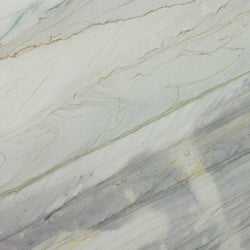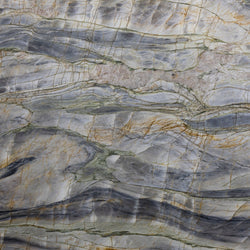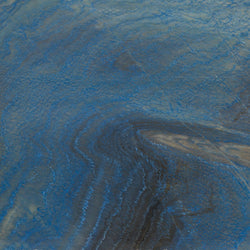
Azul macaubas a1 select quartzite slab 3/4" polished stone
Polished Stone
$174.00 per S/F
Comparing quartzite vs quartz opens the door to understanding the difference between engineered surfaces and natural stone. At Artistic Tile, we celebrate the movement, veining, and color that only natural quartzite, marble, granite, and sandstone can deliver through our slabs, mosaics, and stone collections.
Quartzite and quartz may sound similar, but the way they are formed makes them very different. Quartzite is a metamorphic rock, born when sandstone is heated and compressed until it hardens into stone. Quartz is created by combining crushed quartz crystals with synthetic additives, pressed into sheets for use as countertops.
That difference influences how each one looks and how it performs. Quartzite slabs show natural veining and granular texture that reflect the earth’s history. Quartz countertops are manufactured, which gives them a consistent look but little of the movement that makes stone unique.
| Attribute | Quartzite | Quartz |
|---|---|---|
| Origin | Natural metamorphic rock formed from sandstone under heat and pressure | Engineered surface made by combining crushed quartz crystals with synthetic additives |
| Hardness | High on Mohs hardness scale (around 7); stands up to daily use | Also strong, but slightly softer and less heat tolerant |
| Resistance to Acidic Liquids | Better performance; less prone to etching when sealed correctly | Non-porous, but may discolor or lose finish over time |
| Appearance | Natural veining, hues ranging from whites and grays to browns; each slab unique | Consistent color and pattern; lacks natural movement |
| Ideal Use | Kitchen countertops, waterfall edges, fireplace surrounds, outdoor kitchens | Indoor countertops and backsplashes where uniformity is desired |
| Care | Needs sealing; clean quartzite countertops with warm water; avoid abrasive cleaners | Low daily care; can be wiped easily, but may lose finish if exposed to extreme heat |
| Heat Tolerance | Handles hot pots, pans, and extreme temperatures with proper sealing | Less tolerant to high heat; hot pots can damage the surface |
| Design Value | Natural beauty and movement add timeless character | Uniform look appeals to those wanting consistency |
If you want to create a home that feels genuine, quartzite is all about the natural beauty it carries. Each slab is shaped over millions of years with minerals like iron oxide and quartz minerals locked within the stone. These create natural color variations and realistic textures, giving quartzite slabs a presence quartz doesn’t have.
Designers often place quartzite, marble, granite, and sandstone among the most popular countertop materials because they are all beautiful choices. They bring authenticity into kitchens, baths, and gathering spaces, adding timeless charm and texture without feeling artificial.
Kitchen countertops are often the first place people compare quartzite vs quartz. Quartzite counters, when properly maintained, are ready for daily life. They handle hot pots, high heat, acidic liquids such as lemon juice, and they clean easily with warm water.
Quartz is promoted as scratch resistant and non-porous, but it lacks the individuality of natural stone. Quartzite is a porous material, which means it benefits from sealing. With care, if you avoid abrasive cleaners and instead use mild solutions, you can keep quartzite looking its best. Clean quartzite countertops reveal veining and color that bring energy into the room.
Quartzite slabs are not only for kitchen countertops. They work beautifully in fireplace surrounds, outdoor kitchens, and even dramatic waterfall edges on islands. A honed finish brings a soft look, while a polished finish lets natural light play across the surface.
If you want to go bold, quartzite’s natural patterns are often the most eye-catching part of a room. Tile is a great option for backsplashes and walls, letting quartzite or marble mosaics tie into stone counters below. This look works best when you keep the rest of the design understated so the stone can take the lead.
One way to compare quartzite vs quartz is to look at the Mohs hardness scale. Quartzite measures around 7, harder than marble and closer to granite. That means it stands up to the toughest daily use. Quartz, built from crushed quartz crystals, also scores well but doesn’t give you the same visual depth.
This means quartzite can easily become the centerpiece of a home. It functions both as a practical work surface and as a design statement. It’s no wonder that quartzite has become a go-to material in many kitchens and baths.
Natural quartzite offers veining that feels alive, unlike quartz which often looks flat. In quartzite, minerals create soft swirls or bold streaks that mimic the look of marble like slabs. Hues ranging from bright whites to smoky grays and warmer browns give you options that can match cabinets, walls, or floors.
If you prefer the clean look of a consistent slab, quartz may appeal to you. But if you want to create a one-of-a-kind installation, quartzite is the way forward. Each slab tells its own story, and that individuality is hard not to let your eye settle on.
The idea of embracing quartzite comes with simple care steps. If you want quartzite countertops that stay beautiful, here is what you can do:
By using these steps, you can find a material that doesn’t just look good in the showroom. It can stand up to everyday life and still deliver natural charm.
Quartzite sits between marble and granite in many ways. Unlike marble, it won’t etch as quickly when exposed to lemon juice or wine. Compared to granite, it carries more flowing, marble like movement. Sandstone, while softer, can be used in outdoor kitchens to give a warm, earthy tone.
Each stone type might be the right choice depending on your project. All of which share one trait quartz lacks: they are genuine natural stones.
At Artistic Tile, the idea of embracing stone has always guided us. Our slabs, mosaics, and marble are more than countertop materials. They are all beautiful choices that pull together the rest of the space. Quartzite counters, granite slabs, and sandstone tiles are available in many styles and finishes, inspiring you to create rooms with individuality.
Gone are the days of the uniform kitchen surface. Today, you can easily get creative with stone and its many colors. That’s why, when comparing quartzite vs quartz, we look toward materials that have a history as old as the earth’s crust itself.
When you stand at the crossroads of quartzite vs quartz, the decision is about more than countertops. It is also about the feeling you want to live with. Quartz offers consistency. Quartzite offers movement, character, and natural beauty.
At Artistic Tile, we believe you can create a home that grows with you over time. From quartzite slabs to marble mosaics, from granite to sandstone, our stones are ready to inspire your design. Let’s complete the look together and turn natural stone into the part of your home that defines the space for years to come.
Read LessPolished Stone
$174.00 per S/F
3/4"
Belvedere
Leather
$60.00 per S/F
1-1/4"
Belvedere
Leather
$80.00 per S/F
Polished Stone
$152.00 per S/F
Leather Stone
$60.00 per S/F
3/4"
Fusion Wow Dark Extra
Leather
$150.00 per S/F
3/4"
Fusion Wow Light
Leather
$130.00 per S/F
3/4"
Fusion Wow Multicolor
Honed
$130.00 per S/F
Honed Stone
$110.00 per S/F
Honed Stone
$80.00 per S/F
3/4"
White
Honed
$70.00 per S/F
1-1/4"
White
Honed
$100.00 per S/F
1-1/4"
White
Polished
$100.00 per S/F
1-1/4"
Naica
Polished
$140.00 per S/F
3/4"
Naica
Leather
$100.00 per S/F
3/4"
Naica
Honed
$100.00 per S/F
3/4"
Naica
Polished
$100.00 per S/F
1-1/4"
Naica
Honed
$140.00 per S/F
Polished Stone
$140.00 per S/F