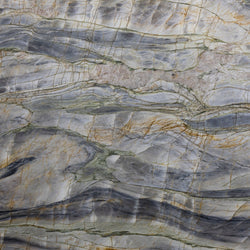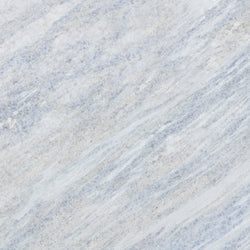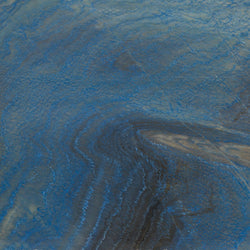
Azul macaubas a1 select quartzite slab 3/4" polished stone
Polished Stone
$174.00 per S/F
Quartzite and calcite are two stones that shape very different experiences in design. Both are all beautiful choices, but each one behaves in its own way, which is why it matters to understand the difference before you bring them into your home.
Think about the choice of material for a kitchen, bathroom, or living space. It can make or break a space. Quartzite and calcite may look similar, yet they are the perfect example of how mineral composition creates two very different results. If you want to create a design that pulls together the rest of the space with confidence, you should know how these stones compare.
Quartzite begins as sandstone that hardens under heat and pressure, becoming a crystallized metamorphic rock. On the Mohs hardness scale, it holds a hardness value of 7. A scratch test against steel or glass won’t mark it, which proves how tough it is. Quartzite often breaks with conchoidal fracture, creating shapes that are unique. Natural color variations and realistic textures give this stone a look that immediately brighten up a room. Tile is a great option for quartzite, since it can be installed in many ways and can easily become a centerpiece. This look works best when you want stone that stands up to the toughest use without losing its character.
Calcite is very different. It’s a carbonate mineral made of calcium carbonate. It forms limestone and marble, which are best used for softer design expressions. With a hardness value of only 3, calcite scratches easily with a knife. It carries perfect rhombohedral cleavage, which means it breaks in three even directions. Calcite crystals grow into prismatic crystals and clear crystal forms that create movement and depth in design. By using a neutral-colored palette with calcite, you can create a one-of-a-kind look that adds timeless charm and texture without feeling too delicate.
Quartzite is made of silicon dioxide, bonded into six sided prisms. This structure makes it hard and dependable. Calcite, with calcium carbonate, has softer bonding that creates smooth surfaces. That’s why calcite might feel a bit more lived-in over time, while quartzite stays strong. The idea of embracing this difference gives you an opportunity to have stone that matches both your taste and the way you live.
If you want to test your sample quickly, place a drop of vinegar or lemon juice. Calcium carbonate reacts to acid and produces bubbles. That reaction is easy to spot and is a perfect example of how calcite behaves differently. Quartzite doesn’t react this way, so it is a carefree choice for kitchens or bathrooms. It can stand up to weak acids, which is why quartzite has become a go-to material in high-use spaces.
Quartzite feels rough when freshly broken, but once polished it becomes smooth and reflective. Calcite also polishes to smooth surfaces, but because it is softer, it can feel a bit more lived-in over time. This doesn’t have to be a drawback, that understated character can grow with the space over time. Tiles that extend throughout the floor or walls in calcite or marble lend updated style that can blend into the background while still making a big impact on the overall feel of the room.
Calcite is the heart of marble and limestone. Marble is recrystallized calcite with veining that is all about the symmetry and movement. Limestone, its sedimentary cousin, carries soft tones that are a great way to add interest without being overwhelming. Granite, by contrast, is filled with quartz and feldspar, which makes it closer to quartzite in toughness. It’s easy to understand why granite and quartzite are often the most durable options, while calcite-based stones lend updated style with a softer look.
Keep in mind that calcite reacts with weak acids, so marble and limestone surfaces should be sealed more often. Spills of vinegar or lemon juice might etch the surface if left too long. Quartzite doesn’t fizz when touched by acid, but sealing still makes sense to help prevent stains. Sealing doesn’t have to feel overwhelming; it is just a way to keep stone looking fresh. If you’d love to use calcite, think about how much extra care you want to give it, and where that stone might be best used for your project.
If you want to go bold, quartzite is best used for a kitchen island or feature wall. Natural color variations and realistic textures create an unexpected focal point that ties into the rest of the design. Marble, a form of calcite, carries veining that creates movement and depth in any space. Limestone gives a more understated look that can easily become a sophisticated neutral. Granite adds a bit of edge to the space, beautifully contrasts the cabinetry, and creates an eye-catching take on natural stone. All beautiful choices, each one is another great example of how stone can shape your home.
Sample identification doesn’t have to be complicated. A scratch test quickly tells you which mineral you have. Quartzite scratches glass; calcite scratches with a knife. Another test is to apply dilute acid and watch if it produces bubbles. These quick checks are a great way to confirm what you are working with before installation.
| Attribute | Quartzite | Calcite |
|---|---|---|
| Origin | Sandstone transformed by heat and pressure into a hard metamorphic rock | Carbonate mineral composed of calcium carbonate, forming limestone and marble |
| Hardness | High hardness value of 7 on the Mohs scale; scratches glass | Low hardness value of 3 on the Mohs scale; scratches with a knife |
| Reaction to Acid | Doesn’t react to weak acids like vinegar or lemon juice | Calcium carbonate reacts to weak acids and produces bubbles |
| Structure | Crystallized quartz with conchoidal fracture and six sided prisms | Perfect rhombohedral cleavage with prismatic crystals and smooth surfaces |
| Texture & Finish | Rough when broken but polishes into smooth, glossy finishes | Polishes well but can feel a bit more lived-in over time |
| Care | Are a carefree choice for high-use spaces; sealing still helps prevent stains | Should be sealed more often; spills of vinegar or lemon juice may etch the surface |
| Design Use | Kitchen islands, feature walls, high traffic floors | Bathrooms, accent walls, decorative surfaces where extra care is acceptable |
| Overall Value | Stands up to the toughest use while showing natural color variations and realistic textures | Adds timeless charm and texture without feeling heavy, but requires more attention |
Quartzite vs calcite is not only about mineralogy, but about how your home should feel day after day. Quartzite is harder, crystallized, and doesn’t fizz when touched by acid. Calcite is softer, reactive, and offers surfaces that can create a look that is timeless due to their veining and crystal forms. You can also use both, since each has its own role. Tile gives the balance the impactful design with the way you live.
If you want to create a design that feels personal, inspiring, and modern, you can explore quartzite, marble, and limestone. At Artistic Tile, we guide you with tile ideas to spark your new project. You can easily get creative with slabs, mosaics, and tiles that immediately brighten up your space. By using a neutral-colored palette or adding a little pop of color and pattern, you can create a one-of-a-kind look that pulls together the rest of the room. This is a great way to bring a feeling to your home with natural stone that can stand up to daily life while still adding timeless charm and texture without feeling overdone.
Read LessPolished Stone
$174.00 per S/F
3/4"
Emerald
Polished
$130.00 per S/F
3/4"
Emerald
Honed
$130.00 per S/F
Honed Stone
$70.00 per S/F
Leather Stone
$60.00 per S/F
Polished Stone
$80.00 per S/F
3/4"
Fusion Wow Dark Extra
Leather
$150.00 per S/F
3/4"
Fusion Wow Light
Leather
$130.00 per S/F
3/4"
Fusion Wow Multicolor
Honed
$130.00 per S/F
3/4"
White
Honed
$70.00 per S/F
1-1/4"
White
Honed
$100.00 per S/F
1-1/4"
White
Polished
$100.00 per S/F
1-1/4"
Naica
Polished
$140.00 per S/F
3/4"
Naica
Leather
$100.00 per S/F
3/4"
Naica
Honed
$100.00 per S/F
3/4"
Naica
Polished
$100.00 per S/F
1-1/4"
Naica
Honed
$140.00 per S/F
Polished Stone
$140.00 per S/F
Polished Stone
$84.00 per S/F
Polished Stone
$95.00 per S/F