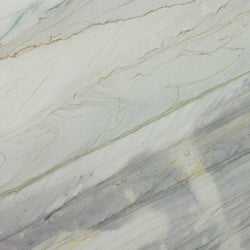
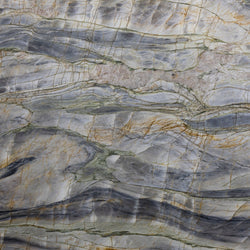
Vanilla onyx tile
12" X 24" X 3/8"
Vanilla
Polished
$71.00 per S/F
Onyx and quartzite are two of the most compelling natural stones you can bring into your home. Each slab carries its own story, texture, and light, inspiring designers and homeowners alike to think about how these materials will shape their kitchens, bathrooms, and living spaces.
When you think about natural stone, a few names come to mind immediately. Quartzite has become a go-to for kitchen countertops and high traffic areas, while onyx draws the eye from the moment you see its translucent layers. Both are stone materials that inspire designers alike, yet the two are very different in how they perform and how they look in a finished space. If you want to create a home design with impact, understanding the key differences is the first step.
Quartzite is born when sandstone transforms under intense heat and pressure. The result is a stone that is highly resistant to scratches and well-suited for busy kitchens. Taj Mahal quartzite is one of the most admired varieties; its soft natural color variations and realistic textures immediately brighten up a culinary space while standing up to everyday use.
Designers turn to quartzite countertops when they need a material that stands up to the toughest demands of modern kitchens. It’s no wonder that quartzite has become a standout choice for homeowners who want timeless elegance without worrying that the surface will quickly show wear.
Onyx is different. Formed in layers that build over time, it’s a softer stone with patterns that almost glow. Its translucent quality lets light pass through, which means onyx can be backlit to create a one-of-a-kind design. This look works best when the stone is used for walls, bathroom vanities, or fireplace surrounds, spaces where it functions both as a decorative surface and as a statement.
If you want to go bold in your kitchen design, onyx definitely makes a big impact on the overall feel of the space. It’s also elemental enough that it won’t look out of place when paired with modern finishes. Too much pattern and color can sometimes feel like too much in a countertop, but in the right setting, onyx tiles and slabs can turn an everyday wall into a conversation piece.
| Attribute | Quartzite | Onyx |
|---|---|---|
| Origin | Quartz sandstone transformed under intense heat and pressure | Layered calcite deposits formed in caves and spring waters |
| Hardness | Very hard and highly resistant to scratches | Softer and more prone to wear |
| Light Qualities | Opaque with natural sparkle and subtle patterns | Translucent, can be backlit for glowing visual appeal |
| Heat Resistance | Excellent; can handle hot pots and pans | Lower; should be treated carefully around high heat |
| Ideal Use | Kitchen countertops, high traffic areas, modern kitchens | Bathroom vanities, fireplace surrounds, decorative walls |
| Design Appeal | Timeless elegance with subtle natural beauty | Luxury look with dramatic patterns and standout glow |
| Care Needs | Forgiving when properly sealed; easier to maintain | Requires more attentive care to prevent staining or scratching |
| Long-Term Value | Excellent choice for durability and everyday use | Best as a statement material for luxury and visual impact |
When comparing onyx vs quartzite, think about how you’ll actually use the space:
Both are all beautiful choices, but the right material for you depends on where you plan to use it and how much care you want to give.
Kitchen countertops are often the centerpiece of a modern home. Quartzite stands up to this role because it can handle the wear of cooking, dining, and daily living. Designers alike recommend quartzite for culinary spaces because it’s both practical and beautiful. Taj Mahal quartzite in particular has become a timeless material that inspires confidence in both its strength and its soft natural beauty.
If you’d love to use a stone that pulls together the rest of the space without overwhelming the design, quartzite countertops are a carefree choice for kitchens. They make it easy to balance the impactful design of a backsplash or wall without fighting for attention.
Onyx is best used for areas where the stone serves as a visual highlight rather than a workhorse. Bathroom vanities, fireplace surrounds, or walls that extend above the counter are the perfect spot to use onyx. By using a neutral-colored cabinet or floor tile beneath, you can create a high-contrast look that pairs well with the translucent patterns of onyx.
Onyx brings luxury into interior design in a way few other stones can. Imagine a bathroom with onyx walls that immediately brighten up when hit with soft lighting, or a fireplace clad in onyx that serves as the anchor of a living room. Onyx is another great example of how natural stone can translate to a more modern take that still feels timeless.
Interior design is often about more than just the countertop. It’s about how the stone materials interact with light, patterns, and space. Quartzite lends itself to modern kitchens and high traffic areas where strength matters. Onyx, on the other hand, gives you an opportunity to have a standout material that feels like art.
Both stones add to the overall ambiance of a home. Quartzite keeps the rest of the space balanced and durable, while onyx provides a chance to make a statement. Think about how the natural beauty of each stone fits into your vision: one is timeless due to its resilience, the other feels like luxury because of its translucent qualities.
Natural stone will last when properly cared for. Quartzite is forgiving, needing only basic sealing and thoughtful use. Onyx requires more attention; it shouldn’t be used where sharp knives, heavy pans, or strong acids are part of daily life. If you want to create a look with onyx, remember that it’s best for walls, vanities, and decorative surfaces.
At Artistic Tile, we believe stone is more than just a surface; it’s the story of the earth brought into your home. Onyx and quartzite are perfect examples of that. Each slab, with its unique characteristics and patterns, inspires us to think about how it will live in a kitchen, a bathroom, or a fireplace surround.
We love working with designers and homeowners alike to discover the right material for their vision. From Taj Mahal quartzite countertops that stand up to everyday life, to translucent onyx slabs that serve as art in modern kitchens, we’ve seen how these stones can define the look of a home.
If you want to create a space that feels tailored, timeless, and unforgettable, we invite you to explore our natural stone collection and see how onyx and quartzite can inspire your next project.
Read Less12" X 24" X 3/8"
Vanilla
Polished
$71.00 per S/F
12" X 24" X 3/8"
Vanilla
Honed
$71.00 per S/F
$0.00 each
Honed Stone
$80.00 per S/F
3/4"
White
Honed
$70.00 per S/F
1-1/4"
White
Honed
$100.00 per S/F
1-1/4"
White
Polished
$100.00 per S/F
1-1/4"
Naica
Polished
$140.00 per S/F
3/4"
Naica
Leather
$100.00 per S/F
3/4"
Naica
Honed
$100.00 per S/F
3/4"
Naica
Polished
$100.00 per S/F
1-1/4"
Naica
Honed
$140.00 per S/F
Polished Stone
$140.00 per S/F
Polished Stone
$160.00 per S/F
Polished Stone
$150.00 per S/F
Vein Cut
Vanilla
Polished
$155.00 per S/F
Cross Cut
Vanilla
Polished
$135.00 per S/F
Vein Cut
Vanilla Extra
Polished
$210.00 per S/F