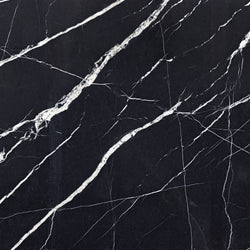
Macael white marble tile
18" X 18" X 3/8"
Macael White
Honed
$41.00 per S/F
Compare honed vs leathered marble to understand how each finish changes the character of the stone. Honed surfaces give a smooth matte look, while leathered stone offers a distinctive textured feel. Learn how these finishes perform in kitchens, bathrooms, floors, and walls, and review the pros and cons to decide which option is right for your project. Browse our collection to find marble slabs and tiles available in both finishes.
Marble is one of the most iconic materials used in design, but the finish you select changes everything about the final look. Two of the most talked-about finishes today are the honed finish and the leathered finish. If you’re weighing honed vs leathered marble, this guide will help you decide which one lines up with the way you want your space to feel.
A honed finish gives marble a matte surface that feels smooth under your hand. Instead of a reflective shine, you’ll notice a softer glow that brings out the natural beauty of the stone. Designers often describe honed stone as understated yet elegant, which works beautifully in kitchen countertops, bathrooms, or even floors.
Because honed surfaces don’t have a glossy coating, they don’t show scratches as quickly. That makes a honed countertop appealing for high traffic areas such as family kitchens. You’ll still need to seal it, since marble is porous and can take in liquids, but the matte appearance helps to disguise everyday wear.
A leathered finish is a more recent trend, and it instantly adds interest to any slab of marble. Created with diamond tipped brushes, this style develops a unique texture that’s neither polished nor flat. Instead, it has a distinctive tactile experience that feels soft, slightly textured, and rich.
The leathered stone look is often chosen when homeowners want a countertop or wall that has more depth. The matte look is still present, but the textured surface creates movement in the stone. Because of this finish, leathered surfaces often disguise stains, water spots, or dirt better than polished stone.
| Attribute | Honed Marble | Leathered Marble |
|---|---|---|
| Finish | Smooth matte surface with soft glow | Textured matte surface with unique tactile feel |
| Appearance | Understated look; less glare than polished | Distinctive texture; adds depth and movement |
| Feel | Smooth surface, satin-like touch | Slightly textured, created with diamond tipped brushes |
| Scratch Visibility | Scratches less visible than polished | Texture disguises scratches even more |
| Stain Resistance | More prone to showing stains; requires sealing | Better at disguising stains, water spots, and dirt |
| Ideal Use | Kitchen countertops, bathrooms, floors, walls | Bar tops, bathrooms, feature walls, kitchens |
| Style | Classic, soft, timeless look | Bold, modern take with added edge |
| Care | Needs sealing; wipe spills quickly | Also needs sealing; hides daily wear better |
| Cost & Availability | Widely available, cost depends on marble type | Less common, may carry a higher price |
So how do you weigh honed vs leathered marble when both give you a matte appearance? The difference comes down to feel and style.
If you’d love to use marble in bar tops or accent walls, the leathered finish gives the stone a distinctive presence. If you prefer the clean, subtle look of honed countertops, that’s the direction that will suit a space built around timeless design.
To better understand these two finishes, it helps to look at them against the more familiar polished finish. A polished surface has a high shine with a reflective appearance. It pulls in light and creates a glossy look that feels formal and glamorous.
By contrast, honed and leathered stone lean more toward natural appeal. A matte or satin finish won’t bounce light around the room. Instead, it tones down the glare and gives the stone a more grounded character. If you want countertops that won’t draw the eye from the rest of the design, honed surfaces or leathered surfaces might be the better way to go.
When you think about marble for a kitchen or bathroom, you need to look beyond style. Here’s how the two compare in daily life:
If you’re aiming for a design that feels classic and understated, honed marble is a safe bet. It works beautifully in:
Honed stone is a great way to balance strong colors or patterns in cabinetry and furniture. It lets the stone pull together the rest of the space without taking over.
If you want marble that adds drama without gloss, leathered stone could be the perfect fit. It’s often used in:
A leathered finish is all about making the stone feel more lived-in and approachable. It adds movement, a matte finish, and a bit of edge to the space.
Both honed and leathered marble need to be sealed. Since marble is porous, it can absorb liquids, leaving behind stains. A good seal will protect the slab against spills from coffee, wine, or acidic substances.
If you want to create a look that lasts, sealing should be part of your care routine. Once sealed, both finishes handle dirt and everyday messes far better. Wipe spills quickly, and you’ll keep your marble surfaces looking beautiful.
Honed Finish
Leathered Finish
At the end of the day, the decision comes down to how you want your home to feel. If you prefer a matte surface with soft beauty, honed marble is your match. If you’d love a slab with unique texture and a more modern take, a leathered finish will give you that edge.
Both finishes are versatile enough for kitchen countertops, bathrooms, floors, or walls. The choice of finish is what defines the experience you’ll have with your stone every day.
When comparing honed vs leathered marble, remember that both are timeless options with their own strengths. A honed finish is smooth, soft, and classic. A leathered finish is textured, bold, and modern. Whichever way you go, you can find a slab that inspires you and makes your next project feel complete.
Marble has been trusted for centuries, and by choosing the right stone finish, you’ll have a surface that stands up to daily life while adding natural charm to your home.
Read Less18" X 18" X 3/8"
Macael White
Honed
$41.00 per S/F
18" X 18" X 3/8"
Macael Grey
Honed
$42.00 per S/F
18" X 18" X 3/8"
Portobello
Honed
$36.00 per S/F
6" X 12" X 3/8"
Lilac
Honed
$170.00 per S/F
6" X 12" X 3/8"
Nero
Honed
$180.00 per S/F
12" X 24" X 3/8"
Bardiglio Imperiale
Honed
$37.00 per S/F
18" X 18" X 3/8"
Bardiglio Nuvolato
Polished
$33.00 per S/F
18" X 18" X 3/8"
Bardiglio Imperiale
Roman Antiqued
$35.00 per S/F
24" X 24" X 3/8"
Bardiglio Nuvolato
Honed
$41.00 per S/F
12" X 24" X 3/8"
Calacatta Borghini
Honed
$59.00 per S/F
12" X 24" X 3/8"
Calacatta Borghini
Polished
$59.00 per S/F
4" X 12" X 3/8"
Calacatta Borghini
Honed
$51.00 per S/F
4" X 12" X 3/8"
Calacatta Borghini
Polished
$51.00 per S/F
$1,320.00 each
Leather Stone
$62.00 per S/F
Leather Stone
$75.00 per S/F
Leather 12" x 24" x 3/8" Stone Aris Edge
$35.00 per S/F
Leather Stone
$62.00 per S/F
$43.68 each
3/4"
Nero Dorato
Polished
$65.00 per S/F
3/4"
Nero Dorato
Honed
$65.00 per S/F
3/4"
Calacatta Viola
Polished
$230.00 per S/F
3/4"
Calacatta Viola
Honed
$240.00 per S/F