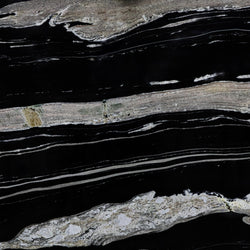
Namib linen tile
24" X 24" X 3/8"
Linen
Matte
$12.00 per S/F
On one path, you have the raw, one of a kind beauty of granite, a stone born from the earth's fire. On the other, the engineered perfection of porcelain, a material designed to stand up to the toughest challenges of a home. The granite vs porcelain debate is a common one for many homeowners, and the right answer depends entirely on the kind of look that you're going for and the life you live. This isn't just about picking a tile; it's about defining a space that will serve you for years to come.
When you’re designing a room, the surfaces you select set the entire tone. The discussion of porcelain vs granite often comes up because both are high quality options for everything from kitchen countertops to flooring. One is a testament to nature's artistry; the other is a marvel of modern ingenuity. But how do you know which one truly belongs in your home? Let's get into the details that matter so you can feel confident in your decision.
Think about the immense pressure and heat deep within the earth. That is where granite is born. This igneous rock is a natural stone, quarried in large blocks from the earth and then cut into a granite slab or tile. Because it’s a quarried stone, no two pieces are ever identical. Each one has its own unique veins, specks, and color waves, giving you a truly one of a kind surface. Its natural beauty has long been a hallmark of luxurious design, from grand commercial spaces to stunning residential kitchens. When you see granite flooring or countertops, you know you're looking at a piece of geological history.
Porcelain is a man made material, but that doesn't take away from its impressive story. It begins with a very refined clay, sometimes called a fine clay, which is mixed with other natural components. That mixture is then pressed into shape and fired at extremely high temperatures in a kiln. This process makes porcelain surfaces incredibly dense and non porous. A key distinction is that while granite shows nature's spontaneous patterns, porcelain's design is intentional. Technology allows it to beautifully mimic natural stone, including granite, so you can get a particular look with engineered consistency.
For homeowners who want to make a statement, the visual appeal is paramount. A polished appearance is achievable with both materials, but they present it in very different ways. Granite tiles give you an authentic, straight from the earth feel. The natural color variations and realistic textures are genuine because they are part of the stone’s formation. If you want your kitchen countertops to be a conversation piece that won’t be replicated anywhere else, the timeless beauty of granite is a great way for you to get there.
Porcelain, on the other hand, gives you incredible control. Do you like the look of a specific granite but want a more uniform pattern across a large floor? Porcelain can do that. It is designed to deliver a consistent and predictable look, which can be a huge asset in certain design schemes. This look works best when you want to establish a clean and well coordinated foundation for your room.
Your home is meant to be lived in, and your surfaces need to be able to deal with daily activity. Both granite and porcelain are highly regarded for their ability to hold up over time. Granite is an incredibly hard stone. Its scratch resistance is very high, and it can stand up to heavy objects and daily wear in high traffic areas. It is, however, a crystalline structure, which means a sharp, heavy impact could cause it to chip or crack.
Porcelain's story is one of engineered strength. The high temperatures used to create it result in a tile that is highly resistant to scratches and is generally more chip resistant than granite. Because it is so dense, it stands up to the toughest household demands, making it a carefree choice for families or for use in demanding commercial spaces.
Life is messy, and your surfaces will inevitably face spills and heat. A material’s water resistance is a major point to take into consideration. Because granite is a natural stone, it is porous and can absorb liquids. This is why it's critical for granite to be properly sealed. A sealed surface will prevent staining and make cleanup simple. When it comes to heat resistance, granite is a champion. You can place hot pans directly on granite countertops without a second thought.
Porcelain is non porous. It has an extremely low moisture absorption rate, which means you don't have to worry about spills seeping in and causing a stain. It doesn't require sealing at all. Porcelain is also highly resistant to heat, making it another excellent material for kitchen countertops where hot pots and pans are common. You also won't have to worry about using acidic cleaners, which can harm natural stone.
So, how do we make the final call in the granite and porcelain matchup? There isn't a single winner because the "better" material is the one that improves the way that you live in your home. If you are captivated by the unique, unrepeatable art of nature and are prepared to take care of it with periodic sealing, granite will reward you with a luxurious appearance that is all your own. If you want a surface that gives you a specific look with very little upkeep and incredible fortitude against the scrapes and spills of life, then porcelain is an amazing solution.
At Artistic Tile, we've seen how both of these materials can completely change the way a space feels. We don't think about it as granite versus porcelain; we think about which material is right for your project. We can help you explore high quality options in both natural stone slabs and porcelain slabs so you can find a material that truly speaks to you and your vision.
Read Less24" X 24" X 3/8"
Linen
Matte
$12.00 per S/F
24" X 24" X 3/8"
Ecru
Matte
$12.00 per S/F
24" X 24" X 3/8"
Dune
Matte
$12.00 per S/F
24" X 24" X 3/8"
Camel
Matte
$12.00 per S/F
24" X 24" X 3/8"
Earth
Matte
$12.00 per S/F
24" X 24" X 3/8"
Jasper
Matte
$12.00 per S/F
24" X 48" X 3/8"
Linen
Matte
$13.00 per S/F
24" X 48" X 3/8"
Ecru
Matte
$13.00 per S/F
24" X 48" X 3/8"
Earth
Matte
$13.00 per S/F
12" X 24" X 3/8"
White
Matte
$13.00 per S/F
12" X 24" X 3/8"
Beige
Matte
$13.00 per S/F
12" X 24" X 3/8"
Grey
Matte
$13.00 per S/F
12-13/16" X 12-3/4" X 3/8"
Grey Foussana
Honed
$44.00 per S/F
12-13/16" X 12-3/4" X 3/8"
Bardiglio
Honed
$44.00 per S/F
12-13/16" X 12-3/4" X 3/8"
Smoke
Honed
$44.00 per S/F
12-13/16" X 12-3/4" X 3/8"
Naica
Matte
$44.00 per S/F
24" X 24" X 3/8"
Ivory
Matte
$14.00 per S/F
24" X 24" X 3/8"
Ash
Matte
$14.00 per S/F
24" X 24" X 3/8"
Coal
Matte
$14.00 per S/F
24" X 48" X 3/8"
Sand
Textured
$15.00 per S/F
24" X 48" X 3/8"
Smoke
Textured
$15.00 per S/F
24" X 48" X 3/8"
Charcoal
Textured
$15.00 per S/F
Polished Stone
$60.00 per S/F
1-1/4"
Galaxy Grey
Honed
$140.00 per S/F
3/4"
Galaxy Grey
Honed
$90.00 per S/F
Honed Stone
$60.00 per S/F
3/4"
Patagonia Extra
Polished
$155.00 per S/F
1-1/4"
Patagonia
Rock
$265.00 per S/F
Honed 18" x 18" x 3/8" Stone Aris Edge
$43.00 per S/F