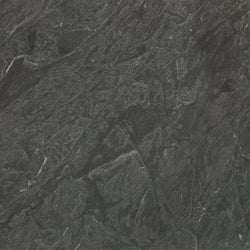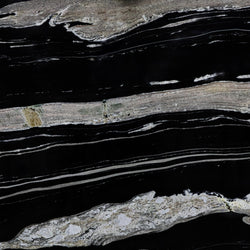
Brazilian black rush granite slab 3/4" polished stone
Polished Stone
$60.00 per S/F
Granite has long been one of the most trusted materials for bathroom surfaces and kitchen countertops. It’s a natural stone that has helped shape how we think about quality and character in a home. When you start with granite, you’re choosing something that feels real and substantial. The question is whether you should go for granite tiles or a granite slab. Each can look quite well, but they offer a different kind of approach depending on what you want to create. You can think about the size, thickness, and finish that will work best for your project and give you an outcome that you won’t forget.
Granite slabs are cut as single pieces of stone, while granite tiles are made from smaller sections placed together with grout. Both are made from the same natural stone, but the look and feel are different.
If you want a countertop that feels continuous and smooth, a granite slab will give you an uninterrupted finish. It tends to have natural color variations and realistic textures that flow all the way across. Granite tiles, on the other hand, are lighter, thinner, and easier to work with. You can use them for flooring, wall cladding, or even bathroom counters if you want a design that feels more flexible.
This kind of approach doesn’t have to limit you. It can give you an opportunity to use granite in areas where a single piece slab might be harder to install.
When you see a granite slab in a kitchen, it feels like one complete story. The movement and color shift across the surface in a way that you can’t replicate with other materials. You can go for a look that feels modern or one that feels more traditional depending on the shade and edge finish you select.
Granite tiles break that pattern into smaller sections, which can give you a particular look that feels handcrafted. You can put more focus on grout color if you want to tie it into the cabinetry or flooring. This look works best when the layout is well-coordinated, creating a rhythm across the counter.
You could even pair granite tiles with limestone, travertine, or porcelain to create an accent that contrasts beautifully with the rest of your space. For homeowners who want to create a design that feels layered and detailed, tiles are a great way for you to do that.
When you take into consideration the cost of material and labor, granite tiles tend to be less expensive. They’re thinner, easier to handle, and quicker to install, which can cut down on the overall job time.
Granite slabs cost more because of the size, weight, and fabrication that’s involved. The slab requires skilled installers who can cut, polish, and fit the stone precisely. If you do want a look that feels more luxurious, a slab will have that impact right away.
Tiles, by contrast, can give you an excellent way to enjoy granite without the higher upfront cost. If your project involves smaller counters or bathroom vanities, tiles might even make more sense.
| Attribute | Granite Tiles | Granite Slab |
|---|---|---|
| Material Form | Smaller cut pieces installed with grout lines | Single continuous piece of natural stone |
| Thickness | About 1 cm | 2–3 cm |
| Installation | Easier to install and adjust during layout | Requires skilled fabricators and heavy support |
| Cost | Lower material and labor costs | Higher due to cutting, polishing, and transport |
| Seams | Visible grout joints between tiles | Minimal seams for a smooth continuous look |
| Design Flexibility | Can be used across walls, floors, or small counters | Best for large counters or island installations |
| Repair & Replacement | Individual tiles can be replaced if damaged | Repairs are complex and costly |
| Maintenance | Requires cleaning and sealing of grout lines | Easier to clean with fewer seams |
| Overall Look | Textured, modular, and customizable | Polished, seamless, and high-end |
| Best For | Bathrooms, walls, smaller kitchens | Large kitchens, islands, luxury counters |
A granite slab is heavier and thicker, so it will require support from solid cabinetry and accurate measurements. Professional installation is important so the slab fits correctly and sits level.
Granite tiles can be installed in more situations because they’re easier to handle. They work well for wall cladding, backsplashes, or even flooring. The grout lines also make it easier to deal with slight irregularities in the surface below. If you do want to take on a smaller project or remodel, tiles are a great way for you to use granite in a more flexible way.
Even though slabs demand more work upfront, the end result will give you an uninterrupted look that feels finished and polished.
Both granite slabs and tiles stand up well to daily use, scratches, and heat, which is why granite has long been a top pick for kitchen countertops. Still, there are differences in care.
Granite slabs have fewer seams, so there’s less grout to clean. You just need to keep the stone sealed properly so liquids don’t settle into the pores. Granite tiles, on the other hand, will need attention around the grout lines, but those can be resealed easily. If a tile ever chips, you can replace that tile without needing to redo the whole surface.
If you do want a surface that stays smooth and simple to care for, a slab will take care of that for you. If you like the idea of having more flexibility in upkeep and repair, tiles might be the better fit.
A granite slab is usually two to three centimeters thick, which gives it a presence you can feel right away. The edge can be polished or cut into different profiles to match the rest of the kitchen. That small detail can change the way the counter feels overall.
Granite tiles are thinner, about one centimeter, and rely on grout to create a unified surface. You can easily find tiles that are polished or matte, giving you a new look and feel depending on the tone of your design.
If you want to add a bit of contrast, you can go for a darker grout line against lighter stone. For something softer, keep the colors close so the pattern stays subtle and clean.
If you want to create a kitchen countertop that looks refined and expansive, a granite slab will give you an uninterrupted field of stone that can make the space feel open. You can pair it with white cabinets, beige flooring, or black accents for a look that feels balanced.
Granite tiles, on the other hand, can easily become the core of creative projects. You can use them to tie together flooring, backsplashes, and walls in a way that feels connected. Tiles can look good when combined with marble or porcelain too, especially if you want to create interest without overcomplicating the design.
For homeowners who want to go for more of a customized layout, tiles give you an excellent way to get creative with placement and pattern.
The decision between granite tiles and slabs depends on what kind of project you’re working on and how you want the final design to feel. Granite slabs will give you that uninterrupted, polished expanse of stone that feels cohesive. Granite tiles can make a space feel a bit more detailed and approachable. Both are strong choices that can easily improve the value and look of your home.
At Artistic Tile, we work with natural stone every day, from granite and quartzite to travertine, limestone, and porcelain. We believe that each piece of stone has its own story and that the right combination can change the way a room feels. You can visit one of our showrooms or browse our online collections to find the stone that fits your kitchen, bathroom, or wall cladding project.
We’re here to help you find a look that is well-coordinated, functional, and true to your vision, with the craftsmanship and quality Artistic Tile has long been known for.
Read LessPolished Stone
$60.00 per S/F
1-1/4"
Galaxy Grey
Honed
$140.00 per S/F
3/4"
Galaxy Grey
Honed
$90.00 per S/F
Honed Stone
$60.00 per S/F
Honed 18" x 18" x 3/8" Stone Aris Edge
$43.00 per S/F
3/4"
Patagonia Extra
Polished
$155.00 per S/F
1-1/4"
Patagonia
Rock
$265.00 per S/F