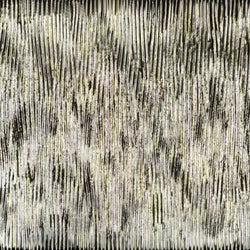
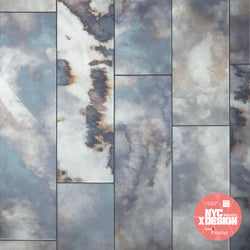
Billie navy mosaic
6-3/16" X 10-1/2" X 1/8"
Navy
Gloss
$98.00 per S/F
The tile you select for a shower can change the way the bathroom looks and feels. It really makes a big impact on the overall feel of the bathroom. You'll be looking at it every day, so the material you land on has to be right. The big debate often comes down to glass tile vs ceramic tile shower applications. Both are stellar materials for wet areas, but they have very different aesthetics and care needs. If you're wondering which is the right tile for your project, you're in the right place. Let's look into the main differences between glass and ceramic tiles so you can find a material that will work for your shower walls.
Glass tile is exactly what it sounds like. It’s a piece of glass, often sold in individual shapes or as part of a sheet of glass mosaic tile designs. The glass can be clear, frosted, or painted on the back with a solid color. Its signature quality is the way it plays with light. Because it is translucent, light passes through it, hits the setting material or colored backing, and bounces back. This can give you an unmatched depth and luminosity that you just don't get from opaque materials.
This quality is why glass tiles, especially in mosaic patterns, are often used to make a bathroom feel a bit more open. If you want a modern look that feels clean and almost glows, glass is a material that will get your attention.
Ceramic tile has long been a go-to for showers and bathroom walls for generations, and for good reason. It starts as a mixture of natural, refined clay and other minerals, which are pressed into shapes and fired in a kiln. Because it's made from natural earth, it's also considered a very eco friendly material. After the first firing, a liquid coating, the glaze, is applied. This is what gives that tile its color and pattern.
This glaze, which is often a translucent glaze, is what makes the tile suitable for wet areas like showers. Ceramic tile offers so many different styles, from classic subway tile to large format squares.
So, in the direct comparison of glass tile vs ceramic tile shower applications, how do they stack up? The main difference isn't just about looks; it's about installation, daily life, and cost. Let's review the pros and cons.
This is the biggest separator. If you want to immediately brighten up your bathroom, glass is your answer. Its ability to interact with light can change the way a space feels. It’s perfect for a contemporary or modern look. The colors are often vibrant and have a liquid depth.
Ceramic, on the other hand, is the ultimate chameleon. Because the design is on the surface, it can be anything. You can go for a handmade, rustic particular look or a sharp, uniform-colored wall. Even though ceramic is often used for more traditional designs, a high-gloss ceramic tile can look quite well in a modern setting too.
| Attribute | Glass Tile | Ceramic Tile |
|---|---|---|
| Material Composition | Made from fused glass; available in clear, frosted, or back-painted finishes | Made from refined clay and minerals; glazed for color and protection |
| Appearance | Translucent and luminous; interacts beautifully with light | Opaque with a smooth surface; available in many colors and patterns |
| Water Absorption | Non porous; completely waterproof when installed correctly | Low absorption due to glaze; suitable for wet areas like showers |
| Stain & Mold Resistance | Highly resistant; water and mildew cannot penetrate the surface | Glaze protects against stains and mold when properly sealed |
| Scratch Resistance | Prone to surface scratches; requires careful cleaning | More resistant to scratches and everyday wear |
| Installation Difficulty | Requires expert installation; adhesive color and technique are critical | Easier and faster to install; more forgiving for imperfections |
| Maintenance | Needs regular wiping to prevent water spots and fingerprints | Simple upkeep; hides spots and residue more easily |
| Design Style | Modern, bright, and light-reflective | Classic, warm, and versatile |
| Cost | Higher material and labor costs | More budget-friendly and widely available |
Here's where things get technical, but it's important for showers.
Glass is naturally non porous. This means its water absorption rate is practically zero. Water simply sits on the surface and won't seep in. This makes it incredibly stain resistant and a poor home for mold or mildew. It is a fantastic material for wet areas.
A glazed ceramic tile is also excellent for showers. The glaze on its surface acts as a barrier, making it stain resistant and impervious to water. The body of the tile, the part underneath the glaze, is not as dense as glass. However, for bathroom walls, this doesn't present a problem as long as the tile is installed correctly with proper waterproofing behind it.
This is a huge factor. You should plan on professional installation for any shower, but the process for glass and ceramic is very different.
Ceramic is the more forgiving of the two. It's opaque, so the installer doesn't have to worry about the adhesive color or trowel marks showing through. It cuts relatively easily with a standard tile saw.
Glass tile is much more difficult to get right. Because of its translucent nature, you see when you look right through it. This means the installer must use a pure white, high-quality thinset and apply it perfectly, or you will see every imperfection. Cutting glass, especially a glass mosaic tile, risks chipping or scratches. It requires a special blade and a very skilled hand. This is not a weekend project; it’s a job for a seasoned professional.
How does each material hold up to daily life?
Glass looks amazing, but it behaves just like a mirror or window. It will show every water spot, soap drop, and fingerprint. If you have hard water, this can easily become a daily battle. Squeegeeing the walls after every shower is almost a must. You also have to think about the grout joints, which will require their own cleaning schedule. Also, glass can get scratches, and once they're there, they're permanent.
Ceramic, especially in a matte or satin finish, is much better at hiding water spots and soap scum. A simple cleaning is usually all it needs. The glazed surface is very hard and highly resistant to scratches. For a shower that needs to stand up to the toughest use without constant wiping, ceramic tiles are a carefree choice for this.
There's no way around it: glass tile is almost always the more expensive path. The material itself costs more, and as we just covered, the professional installation required is more specialized and takes longer, which is why labor costs are also higher.
Ceramic tile is generally one of the most cost-effective materials. This is especially true if you are covering large surface areas. The tile is less expensive, and the installation is more standard, which helps cut down on the overall cost.
This is often the best solution. Combining glass and ceramic tiles is a great way for you to get the "wow" of glass without taking away from the budget or creating a high-care situation.
Think about using a classic ceramic tile for the main bathroom walls and then running a band of shimmering glass mosaic tile through the shower or in the niche. You could even use ceramic on the walls and save the glass for the backsplashes behind the vanity. This kind of approach lets you use glass as a high-impact accent, which is often the most effective way to use it. This is a great way to add interest without being too much. Create interest by combining different textures and finishes.
So, who wins in the glass vs ceramic tile shower debate?
You should get glass tiles if:
You should get ceramic tile if:
Ultimately, that tile you pick, whether it’s the glow of glass or the classic strength of ceramic, should be the one that fits your life and your style. Both are excellent for showers when installed correctly. It all comes down to the look and feel you want and the budget you're working with.
At Artistic Tile, we've seen homeowners create stunning sanctuaries with both materials, as well as with beautiful natural stone, porcelain, and limestone. We believe your shower doesn't have to be just a place to get clean; it should feel like a space that is inspiring you. If you do want to find that perfect tile, we're here to help you navigate all the shapes and styles to find the one that feels like it was made just for you.
Read Less6-3/16" X 10-1/2" X 1/8"
Navy
Gloss
$98.00 per S/F
6-3/16" X 21-1/16" X 1/8"
Ombre Blue
Gloss
$140.00 per S/F
6-3/16" X 10-1/2" X 1/8"
Light Blue
Gloss
$98.00 per S/F
6-3/16" X 10-1/2" X 1/8"
Dark Green
Gloss
$98.00 per S/F
6-3/16" X 10-1/2" X 1/8"
Grey
Gloss
$98.00 per S/F
6-3/16" X 10-1/2" X 1/8"
Ice White
Gloss
$98.00 per S/F
6-3/16" X 21-1/16" X 1/8"
Ombre Green
Gloss
$138.00 per S/F
6-3/16" X 10-1/2" X 1/8"
Pale Green
Gloss
$98.00 per S/F
6-3/16" X 10-1/2" X 1/8"
Moonbeam
Gloss
$98.00 per S/F
6-3/16" X 21-1/16" X 1/8"
Ombre Moonbeam
Mixed Finish
$140.00 per S/F
4" X 4" X 1/2"
Cloud White
Gloss
$33.00 per S/F
4" X 4" X 1/2"
Sea Spray
Gloss
$34.00 per S/F
4" X 4" X 1/2"
Sky Blue
Gloss
$33.00 per S/F
4" X 4" X 1/2"
Sand
Gloss
$33.00 per S/F
4" X 4" X 1/2"
Rose
Gloss
$34.00 per S/F
4" X 4" X 1/2"
Mediterranean Blue
Gloss
$31.00 per S/F
4" X 4" X 1/2"
Coriander
Gloss
$31.00 per S/F
4" X 4" X 1/2"
Cumin
Gloss
$31.00 per S/F
4" X 4" X 1/2"
Turmeric
Gloss
$33.00 per S/F
4" X 4" X 1/2"
Sumac
Gloss
$34.00 per S/F
2" X 6" X 1/2"
Cloud White
Gloss
$28.00 per S/F
2" X 6" X 1/2"
Sand
Gloss
$28.00 per S/F
2-15/16" X 11-13/16" X 3/8"
Azul
Gloss
$12.50 per S/F
2-15/16" X 11-13/16" X 3/8"
White
Gloss
$12.50 per S/F
2-1/2" X 10" X 3/8"
White
Gloss
$14.50 per S/F
3" X 6" X 3/8"
White
Gloss
$12.50 per S/F
4" X 12" X 3/8"
White
Gloss
$12.50 per S/F
5" X 10" X 3/8"
White
Gloss
$13.50 per S/F
Antiqued Glass
$125.00 per S/F
Satin Glass
$165.00 per S/F
A Mano Pyramide
Blue
8" X 8" X 1/2"
$62.00 per S/F
A Mano Pyramide
Green
8" X 8" X 1/2"
$65.00 per S/F
A Mano Pyramide
Natural
8" X 8" X 1/2"
$65.00 per S/F
A Mano Triangolo
Blue
8" X 8" X 1/2"
$65.00 per S/F
A Mano Triangolo
Green
8" X 8" X 1/2"
$65.00 per S/F
A Mano Triangolo
Natural
8" X 8" X 1/2"
$65.00 per S/F
$779.65 each
$536.20 each
$40.00 each