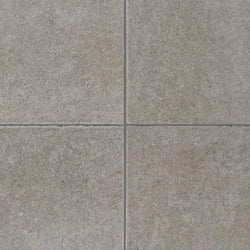
Bianco dolomiti standard dolomite tile
12" X 24" X 3/8"
Bianco Dolomiti Standard
Honed
$42.00 per S/F
Dolomite and limestone have inspired designers for centuries. Both are sedimentary rock types with unique mineral composition, fossils, and texture that can spark ideas for walls, slabs, and flooring. If you want to create a home that feels timeless, understanding how they compare gives you an opportunity to make the right choice.
Dolomite and limestone are often mentioned together, but they’re not the same. Both are carbonate rocks, built around calcium carbonate. Dolomite contains calcium magnesium carbonate, which gives it a different feel and look. This means they are close relatives in geology, yet their uses in flooring, walls, and slabs are distinct.
You can think about limestone as softer and lighter in tone, while dolomite tends to have a cooler, gray-white palette. This difference makes a big impact on the overall feel of the space.
Limestone is a sedimentary rock that might commonly be found in shallow seas, where fossils, shells, and skeletal fragments accumulate. Over time, these grains compress into stone rich with mineral calcite. Dolomite, or dolostone, comes later; magnesium ions enter limestone during a geological process called recrystallization. That shift creates mineral dolomite, changing the mineral composition and giving the rock its own character.
Keep in mind that impurities influence color, pattern, and veining. This is why one slab may carry soft creams while another displays bold gray movement.
If limestone is subjected to heat and pressure, it transforms into marble. When magnesium is present, the result can be dolomitic marble, a metamorphic rock that can stand up to polishing and still reveal natural color variations and realistic textures. It’s a perfect example of how formation shapes what you see in a finished slab or tile.
You can also find fossils within limestone, lending updated style to walls or floors that extend throughout the rest of your home.
Texture defines both dolomite and limestone. Fossils and grains create visual movement; impurities add even more subtle richness to the design. If your home has interesting interior surfaces, these stones certainly prove that it’s easy to draw the eye from one area to another.
This look works best when you keep the rest of the design simple. Too much pattern and color can overwhelm the room, but the right balance can immediately brighten up kitchens, baths, or living areas.
One way geologists tell dolomite and limestone apart is by using dilute hydrochloric acid. Limestone reacts quickly; dolomite reacts more slowly. This difference in acid neutralization translates to performance. Limestone tiles might etch faster in kitchens, while dolomite can be a bit steadier. That doesn’t have to stop you from using either; it just gives you an opportunity to think about where the stone is installed.
Both stones are all beautiful choices for flooring, walls, and slabs. Tile is a great option if you want to create a bathroom that feels lived-in yet tailored. Slabs of dolomite are also a great choice for livening up kitchens, while limestone tiles can pull together the rest of the design in softer tones.
You can easily get creative with mosaics, mixing dolomite and limestone in patterns that make it easy to achieve balance across the room. To complete the look, be sure to pair the stone with lighting that accentuates its texture.
Here are a few points that can make or break a space:
It’s easy to understand why both stones continue to inspire designers.
| Attribute | Dolomite | Limestone |
|---|---|---|
| Origin | Carbonate rock containing calcium magnesium carbonate | Sedimentary rock made of calcium carbonate and fossil fragments |
| Hardness | Slightly harder; can stand up better in high-traffic areas | Softer; more prone to scratches and wear |
| Reaction to Acids | Reacts slowly; steadier performance in kitchens and baths | Reacts quickly; more sensitive to lemon juice, wine, and vinegar |
| Appearance | Cooler gray-white palette with understated movement | Lighter tones, creams, and fossils that add visual texture |
| Texture | Uniform background with natural color variations and realistic textures | Visible fossils, shells, and grains; adds a fun, playful detail |
| Best Uses | Kitchen countertops, floors, and slabs that immediately brighten up spaces | Walls, bathrooms, and decorative areas; can also be used in flooring |
| Care | Needs sealing; less prone to quick etching than limestone | Needs sealing and frequent care; etches faster in active kitchens |
| Cost | Often cost effective; price depends on quality and finish | Usually affordable; rare limestone types can be more expensive |
| Design Appeal | Modern take that can feel understated; balances impactful design | Classic warmth with fossils and texture; lends updated style to interiors |
If you want to create a timeless look, dolomite slabs are a perfect example of how geology translates into style. Another brilliant idea for incorporating limestone is using tiles that extend above a vanity or around a fireplace wall. By using a neutral-colored stone, you can also balance the impactful design of bolder cabinetry.
You could even pair dolomite flooring with limestone walls, creating movement and depth in a way that adds cohesiveness to the overall design.
Dolomite and limestone don’t have to be viewed as a decision between one or the other. Both can lend updated style to your home; both are natural stone types that tie into the idea of embracing texture, fossils, and mineral composition in your design. If you’d love to use stone that adds timeless charm and texture without feeling forced, Artistic Tile is a great example of what thoughtful selection looks like.
Visit Artistic Tile to discover dolomite, limestone, and other natural stone tiles and slabs that can inspire your next project.
Read Less12" X 24" X 3/8"
Bianco Dolomiti Standard
Honed
$42.00 per S/F
12" X 24" X 3/8"
Bianco Dolomiti Standard
Polished
$41.00 per S/F
12" X 24" X 3/8"
Bianco Dolomiti Extra
Polished
$56.00 per S/F
12" X 24" X 3/8"
Bianco Dolomiti Select
Honed
$50.00 per S/F
24" X 24" X 3/8"
Bianco Dolomiti Select
Honed
$89.00 per S/F
4" X 12" X 3/8"
Bianco Dolomiti A1 Select
Honed
$36.00 per S/F
4" X 4" X 3/8"
Bianco Dolomiti
Honed
$48.00 per S/F
12" X 24" X 3/8"
Bianco Dolomiti Select
Polished
$50.00 per S/F
18" X 36" X 3/8"
Bianco Dolomiti Select
Polished
$91.00 per S/F
4" X 12" X 3/8"
Bianco Dolomiti A1 Select
Polished
$36.00 per S/F
12-23/32" X 11-1/23" X 3/8"
Gascogne Beige
Lightly Tumbled
$58.00 per S/F
12-23/32" X 11-1/23" X 3/8"
Sahara Blue
Lightly Tumbled
$58.00 per S/F
24" X 48" X 11/32"
Cream
Semi-Polished
$19.00 per S/F
24" X 48" X 11/32"
Sand
Semi-Polished
$19.00 per S/F
Honed Stone Broken Joint 1.0cm
$55.00 per S/F
$243.00 each
Roman Antiqued 18" x 18" x 3/8" Stone Chiseled Edge
$35.00 per S/F
Honed 18" x 32" x 9/16" Stone Straight Edge
$33.00 per S/F
$0.00 each
Polished Stone
$60.00 per S/F
$506.25 each
3/4"
Bianco Dolomiti Extra
Polished
$240.00 per S/F
3/4"
Bianco Dolomiti Select
Polished
$180.00 per S/F
1-1/4"
Bianco Dolomiti Extra
Polished
$285.00 per S/F