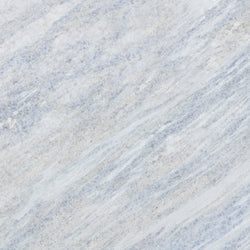
Bianco dolomiti standard dolomite tile
12" X 24" X 3/8"
Bianco Dolomiti Standard
Honed
$42.00 per S/F
Dolomite and calcite may share the same roots in carbonate minerals, but their differences in composition, hardness, and formation create unique surfaces. At Artistic Tile, you’ll find both expressed in mosaics, slabs, and limestone that give your home a story told through natural stone.
When you think about natural stone, two names often stand out: dolomite and calcite. At first, they might seem close in look and origin, but there are key differences in chemical composition, formation, and how they perform as tiles, slabs, and mosaics. Knowing what sets them apart is a great way to choose stone that feels right for your project and gives you confidence that the material will support your vision.
Both dolomite and calcite are carbonate minerals that make up the building blocks of natural stone. They appear in carbonate rocks like limestone, marble, dolomitic limestone, and dolomitic marble, all beautiful choices that inspire you to create a one-of-a-kind space.
This difference in chemical composition makes dolomite slightly harder and often denser. Both minerals form crystals that can easily become natural tiles with character, color, and movement.
The formation of each mineral is tied to water, time, and pressure.
Later, through heat and pressure, both can become metamorphic stone. During recrystallization, they develop new sparkle and depth that instantly brighten up interiors.
For homeowners and designers, being able to distinguish calcite from dolomite is important. You can notice it in these ways:
This is a perfect example of how small changes in chemical composition can make a big impact on the overall feel of a space.
One of the oldest ways to separate the two is the acid test. A drop of weak acid on calcite produces fizz and leaves behind a white powder. Dolomite reacts too, but slower, which is another way to identify the main difference.
| Attribute | Dolomite | Calcite |
|---|---|---|
| Origin | Formed when magnesium-rich seawater alters limestone, creating dolostone | Formed primarily from marine life remains compacted into limestone |
| Chemical Composition | Calcium magnesium carbonate (CaMg(CO₃)₂) | Calcium carbonate (CaCO₃) |
| Hardness | Slightly harder, often more dense | Softer and more reactive |
| Acid Test | Slow fizzing reaction, sometimes only with powdered sample | Immediate and vigorous fizz, leaves behind white powder |
| Appearance | Subtle tones, often gray or cream with natural color variations | Brilliant whites and expressive hues, sometimes translucent crystals |
| Common Forms | Dolomitic limestone, dolomitic marble, tiles and slabs | Limestone, calcite crystals, marble, tiles and slabs |
| Ideal Use | Can be installed in walls, floors, or mosaics where understated beauty is desired | Best used for decorative surfaces, walls, or areas where luminous stone is preferred |
| Geological Notes | Often found in sedimentary basins and deposits altered by magnesium | Commonly found in caves as stalagmites and in sedimentary rock layers |
Other simple tests include:
This doesn’t have to be complex science. These are a great way to see if the stone you want will work for the space you’re designing.
The story of calcite and dolomite continues in the materials we use every day.
Centuries ago, both minerals were also tied to cement, shaping buildings and cities. Today, they serve as the inspiration for tiles, mosaics, and slabs that define homes with artistry.
The main difference for designers isn’t just in the science, it’s in how the stone works once it’s part of your space.
Both are beautiful choices. The one you choose will work when you think about how you want your room to feel. If you want to go bold, a high-contrast look that pairs well with dolomitic marble may be the perfect solution. If you prefer the clean look of calcite, that understated brightness can serve as the foundation that ties into the rest of the space.
Gone are the days of stone being thought of only as a structural material. Today, its story inspires design. The same sedimentary rock that forms in caves now functions both as a building material and as the canvas for artistry. Through recrystallization and metamorphic change, what began as raw deposits now creates surfaces that serve as a striking detail in kitchens, baths, and beyond.
It’s easy to understand why both calcite and dolomite continue to inspire. The tiles you see today are a direct reflection of that natural history, translated into luxury design.
When you look at dolomite vs calcite, the difference is subtle but meaningful. Dolomite’s magnesium content means it can stand up a little more to wear, while calcite’s purity provides brilliant whites and flowing veins. Both are carbonate minerals that have become central to design because they offer natural color variations and realistic textures.
At Artistic Tile, we celebrate those qualities with curated collections. From dolomitic limestone mosaics that are a great option for adding a bit of edge to a bathroom wall, to luminous calcite tiles that can easily become the centerpiece of a kitchen, every stone is selected to inspire. If you want to create a home that tells a story through natural stone, you can find a material that does exactly that in our collections.
Read Less12" X 24" X 3/8"
Bianco Dolomiti Standard
Honed
$42.00 per S/F
12" X 24" X 3/8"
Bianco Dolomiti Standard
Polished
$41.00 per S/F
12" X 24" X 3/8"
Bianco Dolomiti Extra
Polished
$56.00 per S/F
12" X 24" X 3/8"
Bianco Dolomiti Select
Honed
$50.00 per S/F
24" X 24" X 3/8"
Bianco Dolomiti Select
Honed
$89.00 per S/F
4" X 12" X 3/8"
Bianco Dolomiti A1 Select
Honed
$36.00 per S/F
4" X 4" X 3/8"
Bianco Dolomiti
Honed
$48.00 per S/F
12" X 24" X 3/8"
Bianco Dolomiti Select
Polished
$50.00 per S/F
18" X 36" X 3/8"
Bianco Dolomiti Select
Polished
$91.00 per S/F
4" X 12" X 3/8"
Bianco Dolomiti A1 Select
Polished
$36.00 per S/F
Polished Stone
$50.00 per S/F
Polished Stone
$60.00 per S/F
$0.00 each
3/4"
Blue Sky
Honed
$90.00 per S/F
3/4"
Blue Sky
Polished
$90.00 per S/F
Polished Stone
$84.00 per S/F
Polished Stone
$95.00 per S/F