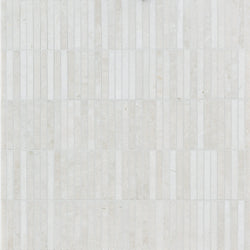
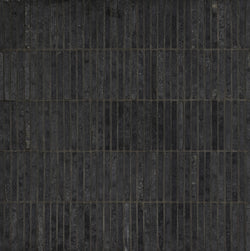
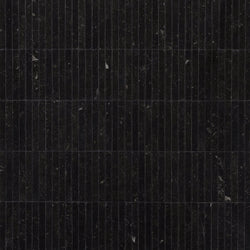
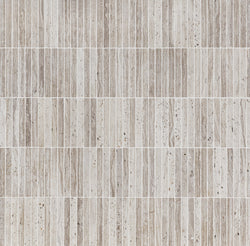
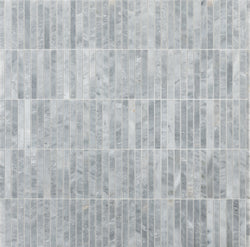
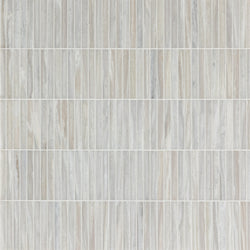
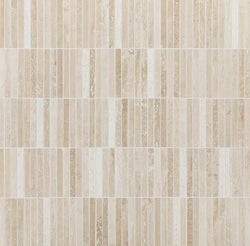
Abbey road bianco dolomiti dolomite mosaic
11-7/8" X 12-7/16" X 3/8"
Bianco Dolomiti
Honed
$50.00 per S/F
Discover the timeless appeal of beige travertine tile. This natural stone brings warmth, texture, and subtle elegance to any space. Ideal for floors, walls, bathrooms, and commercial interiors, it pairs organic variation with a grounded, modern look. Whether honed or tumbled, beige travertine creates a neutral backdrop that feels intentional without overpowering the design around it.
Beige travertine tile has always been in demand for good reason. Whether it's used on floors or walls, it brings just enough of a warm, grounded tone without feeling staged or overly polished. These tiles are cut from natural limestone deposits and come loaded with character. The stone carries that lived-in softness, showing off flecks and pits that feel real, tactile, and organic.
If you're working on a room that needs a tactile, neutral anchor, beige travertine is the material that makes everything around it feel more intentional. It's often the first stone people notice in luxury spaces without even realizing it.
Beige travertine tile sits somewhere between marble and limestone in how it behaves, feels, and looks. It’s a form of limestone, but the way it forms gives it naturally occurring holes and texture. While marble’s all about high shine and precise veining, travertine does the opposite. Its surface is honed or tumbled for a finish that feels gently worn in.
Because of its organic formation and mineral content, travertine brings natural color variation and realistic textures to every piece. It's down-to-earth without being too rustic. Beige variations are especially effective if you want something that doesn’t compete with bold colors or loud design pieces.
Travertine tile can be installed across floors, walls, and accents. For bathrooms, many designers use travertine to run tiles from the shower floor all the way up to the bathroom wall or vanity backsplash; this pulls the look together while keeping the rest of the room open for color or trim.
For kitchens, it brings warmth without overpowering the cabinetry. When used in commercial buildings, beige travertine on walls presents a calm backdrop, giving the space some texture while still letting architectural lighting or signage stand out.
If you're working on a full-floor layout or just updating a shower wall, travertine is rarely out of place. It slips easily between design eras and room functions, which is a big reason why architects continue to specify it on both residential and commercial projects.
The beauty of travertine is that it doesn't have to be assigned to one type of project. It can go from the bathroom floor to the living room accent wall without missing a beat. Larger format tiles can stretch across open floor plans, helping the room feel broader and more deliberate, while mosaics bring that same stone look onto curved or small surfaces like shower floors or built-in shelves.
Bathrooms, in particular, are the perfect spot to use beige travertine tile. It handles wet conditions well when sealed, and its warm palette keeps the space feeling cozy and not too sterile. Designers often run larger tiles up the wall but change the scale and finish in the shower floor area.
In commercial spaces, you’ll often see travertine used as a wall finish near elevators or main entrances. That neutral base keeps things sharp without being imposing.
Beige travertine, like all natural stones, comes with tile variation. This is part of the appeal. If you want a look that isn’t flat or overly uniform, the color shifts in travertine work in your favor. Each tile might show swirls of taupe, cream, or pale honey, and when placed across a large floor, they offer subtle movement and pattern you just won't get from manufactured tile.
Grout joints are another key factor that makes or breaks how your tile looks once it’s installed. The width of the joint can completely change the style of the finished surface. Tight grout joints help the layout feel more modern and clean. Wider joints lean traditional or rustic.
The color of grout also plays a major role. Match the grout to the tile to create a smoother field or go for contrast if you want to frame each tile more clearly. If you’re unsure which direction to go, laying out a few tiles dry with grout options nearby can give you clarity before committing.
Travertine finishes affect both the look and feel of your floor or wall tile. Honed travertine is smooth and matte, which makes it feel more current and tailored to modern interiors. This is a safe bet for larger floors or clean bathroom spaces where you want natural texture, but not a rough or pitted feel.
Tumbled travertine is rawer. It has softly rounded edges and surface texture that makes it feel aged. If you want to go for something that balances old world grit with clean finishes, this can be a strong choice. It’s frequently used in showers or on powder room walls to add just enough detail without overpowering small layouts.
If you're investing in tile, always buy extra. It's one of those details that can save headaches later. Natural stone tiles like travertine often feature a wide range of natural variation in color and texture. That means two tiles from the same shipment may not look identical.
When you keep a few extra sq ft on hand, future repairs or adjustments are less complicated because you're pulling from the same lot with similar shade variation, finish, and edges. If you don’t have a backup tile that blends in well, even a small fix can stand out in all the wrong ways.
You can find beige travertine tiles in square, rectangular, and specialty shapes. Matching trim pieces also help finish edges near windows, doors, or shelves. In a clean layout, the trim piece can serve as a line break or act like a tile frame near vanity mirrors or backsplashes.
If you want to create interest, you can run subway-shaped travertine halfway up a wall and cap it with a bullnose trim. In open rooms, pairing rectangular tiles with square inserts or mosaics at intersections creates geometric flow without looking overdesigned.
Layout is all about the symmetry and movement that defines how the space looks and feels, so start by roughing out the main walks or sightlines before you finalize shape or trim decisions.
Most beige travertine floor tiles are sold in formats like 12 x 12, 16 x 16, and 18 x 18 inches. Larger format tiles such as 12 x 24 inches are more in line with today’s open floorplans and long sightlines. For detailed areas or curves, 2 x 2 mosaics are widely used, especially in shower floors where slope and grip matter.
Smaller tiles also make future repairs easier, since you can remove and reset without disrupting an entire large slab.
Keep these tips in mind:
Beige travertine tile gives you a calm space with natural movement and texture. It serves as the foundation that everything else grows from. Walls look more interesting. Floors feel complete without screaming for attention. And every project feels grounded without leaning too traditional.
Whether you're working on a bathroom wall, wrapping a shower floor, planning commercial wall accents, or re-flooring high-traffic spaces, this stone stays relevant. This look works best when the tile’s subtle grain and softness frame whatever else is happening in the room. When done right, beige travertine doesn’t just fit, it makes the rest of the space look intentional.
Read Less11-7/8" X 12-7/16" X 3/8"
Bianco Dolomiti
Honed
$50.00 per S/F
11-7/8" X 12-7/16" X 3/8"
Nero
Honed
$40.00 per S/F
11-7/8" X 12-7/16" X 3/8"
Calacatta Gold
Honed
$50.00 per S/F
11-7/8" X 12-7/16" X 3/8"
Vanilla
Honed
$55.00 per S/F
11-7/8" X 12-7/16" X 3/8"
White Sand
Honed
$44.00 per S/F
11-7/8" X 12-7/8" X 3/8"
Arabescato D'oro
Honed
$51.00 per S/F
12-7/16" X 11-7/8" X 1/2"
Noir
Antiqued
$36.00 per S/F
12-7/16" X 11-7/8" X 1/2"
Sea Grey
Antiqued
$36.00 per S/F
11-7/8" X 12-7/16" X 3/8"
Birch White
Honed
$50.00 per S/F
11-7/8" X 12-7/16" X 3/8"
Viola Reale
Honed
$56.00 per S/F
11-7/8" X 12-7/16" X 3/8"
Bianco Carrara
Honed
$40.00 per S/F
11-7/8" X 12-7/16" X 3/8"
Ocean Blue
Honed
$64.00 per S/F
11-7/8" X 12-7/16" X 3/8"
Belgian Bluestone
Honed
$40.00 per S/F
11-7/8" X 12-7/16" X 3/8"
Cloud
Honed
$38.00 per S/F
11-7/8" X 12-7/16" X 3/8"
Grigio Toscana
Honed
$48.00 per S/F
11-7/8" X 12-7/16" X 3/8"
Smoke
Honed
$42.00 per S/F
11-7/8" X 12-7/16" X 3/8"
Volakas White
Honed
$43.00 per S/F
11-7/8" X 12-7/8" X 3/8"
Rosa Minerva
Honed
$51.00 per S/F
11-7/8" X 12-7/16" X 3/8"
Bianco Dei
Honed
$64.00 per S/F
8" X 8" X 3/8"
Sunrise Pink
Tumbled
$35.00 per S/F
8" X 8" X 3/8"
Mountain Mist Grey
Tumbled
$35.00 per S/F
8" X 8" X 3/8"
Birch White
Tumbled
$35.00 per S/F
8" X 8" X 3/8"
Mountain Mist Smoke
Tumbled
$35.00 per S/F
8" X 8" X 3/8"
Sunrise Red
Tumbled
$35.00 per S/F
8" X 8" X 3/8"
Sunrise Gold
Tumbled
$35.00 per S/F
Honed Stone
$110.00 per S/F
$0.00 each