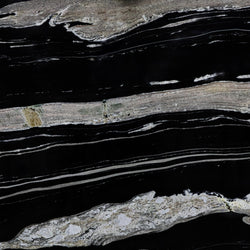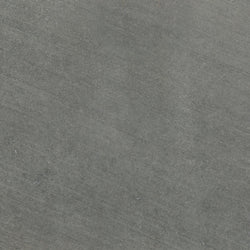
Basaltina basalt tile honed/filled 12" x 24" x 3/8" stone aris edge
Honed/Filled 12" x 24" x 3/8" Stone Aris Edge
$40.00 per S/F
Basalt and granite each bring a completely different look and feel to a space. If you’re weighing both for slabs, flooring, or countertops, you’ll see how their grain, depth of color, and patterns can change the way a kitchen or bathroom sits in the overall design. This is a great way for you to pinpoint whether you want something that looks more like a dark volcanic surface or a lighter, more patterned stone. Let’s take you into what sets them apart, so you can make a choice that will get your attention for all the right reasons.
When you're thinking about basalt vs granite, you’re actually comparing two kinds of igneous rock formed from molten material, just in very different ways. Granite is intrusive, meaning it develops slowly underground from magma, which gives it a coarse-grained pattern. Basalt is extrusive, forming at or near the surface from lava; it cools quickly, resulting in a fine-grained matte visual. This difference alone will put them into two distinct style categories, which is why one might even see them used in completely different types of projects.
Granite develops from slow-crystallizing magma, allowing minerals like quartz, feldspar, and mica to grow large enough to be visible. Those mineral inclusions often result in larger specks and movement in the pattern.
Basalt forms from lava flows that cool in hours or days, giving it a tight, uniform texture that feels like solidified volcanic ground. It tends to contain plagioclase, pyroxene, and iron-rich minerals, sometimes with subtle lighter flecks from silica or magnesium content.
If you want to go bold with a naturally patterned stone, granite will give you an opportunity to have that look. Its coarse-grained texture is all about the symmetry and movement within the slab.
Basalt’s fine-grained surface is more understated, lending itself to a modern take that can cut down on the visual patterning of a space without taking away from the natural stone effect.
Granite colors often range from earth-toned stone patterns to creams, golds, and even blues, because of its mineral diversity. You can go for the traditional lighter granite if you prefer the clean look, or darker grey and black for a high-contrast look that pairs well with modern interiors.
Basalt is most often deep black or charcoal, sometimes with a blue-black cast. That is well-coordinated with steel fixtures and muted palettes, making it excellent for a look that is bold yet grounded.
Granite has long been a go-to for luxury kitchen countertops, bathroom countertops, and slabs for large islands. You can also find it in wall tile and flooring that immediately brighten up a space because of its reflective minerals.
Basalt is often chosen for flooring, wall cladding, and even outdoor pavers when you want a uniform dark stone that can easily become a backdrop for lighter materials. In interiors, it can look quite well when paired with wood-look tiles or limestone in a way that adds a bit of edge to the space.
Both granite and basalt are natural materials that stand up to high heat, which is something you will see when they’re used in kitchens and outdoor grill counters. Granite’s quartz component also gives it slightly more hardness on the Mohs scale compared to basalt.
Basalt is dense and tough because of its iron and magnesium; you can also rely on it when you need flooring that will put more focus on texture than on movement in the grain.
In granite, the pattern changes the way light plays on the surface, often becoming a sophisticated neutral that ties into the rest of the design. Its natural color variations and realistic textures can draw the eye from one area to the next.
Basalt tends toward a single-toned effect with subtle natural streaking or speckling when cut certain ways. This look works best when you want the stone to serve as a steady visual anchor in your space.
If you do like a patterned natural stone with mineral spark, granite is an excellent way for you to put more focus on the countertop or tile itself.
If you happen to like the sleek uniformity of volcanic rock, basalt will have that matte, fine-grained surface that feels like modern design grounded in nature. Think about how each will interact with the other materials in your space; the stone surfaces that you choose will work best when they tie into cabinetry, flooring, and fixtures in a way that is well-coordinated.
You can pair granite with colorful backsplash tile for a lively pop, or go for more of a monochrome palette that accentuates movement in the stone.
Basalt pairs beautifully with crisp white porcelain tile or even limestone for homeowners who want to create contrast without being overwhelming. Another excellent idea for incorporating basalt is to use it as a flooring base with lighter stone slabs drawing attention upward.
Ultimately, basalt vs granite comes down to the look and feel you want, the kind of approach your design needs, and the way your entire space will have to work together. We think about how each natural stone will improve the way that the kitchen, bathroom, or flooring flows; you can go for the traditional warmth of granite or the modern, bold presence of basalt. At Artistic Tile, we have stone slabs, flooring, and wall tiles across different finishes and colors, inspiring you to pair them in ways you won’t forget. If you want us to guide you through granite’s mineral sparkle or basalt’s grounded texture, we can certainly help you find the one that feels right for you.
Read LessHoned/Filled 12" x 24" x 3/8" Stone Aris Edge
$40.00 per S/F
Polished Stone
$60.00 per S/F
1-1/4"
Galaxy Grey
Honed
$140.00 per S/F
3/4"
Galaxy Grey
Honed
$90.00 per S/F
Honed 18" x 18" x 3/8" Stone Aris Edge
$43.00 per S/F
3/4"
Patagonia Extra
Polished
$155.00 per S/F
1-1/4"
Patagonia
Rock
$265.00 per S/F
Honed/Filled Stone
$55.00 per S/F